

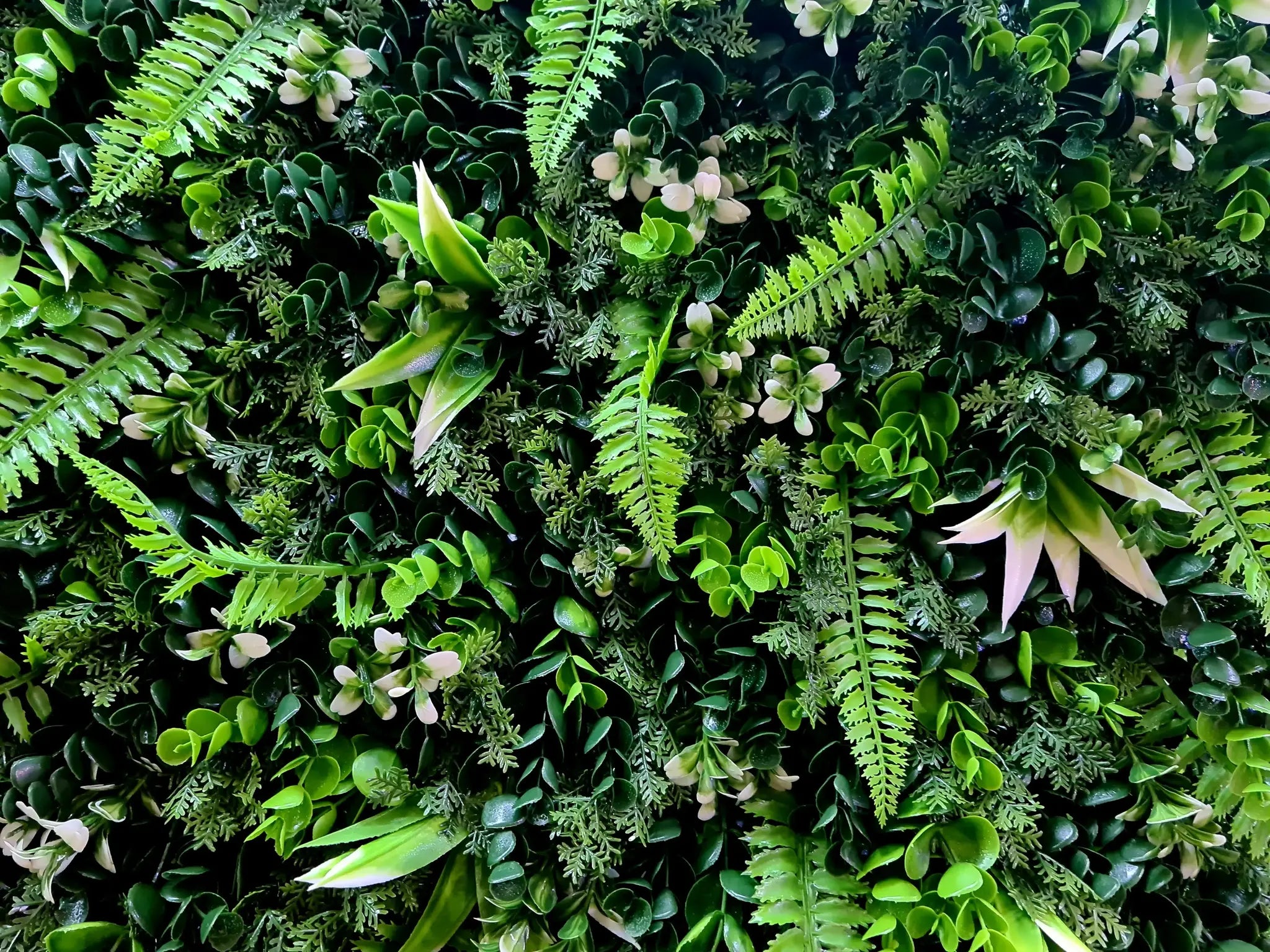
The gap between a fake fern that fools people and one that obviously doesn't comes down to three things: material quality, frond structure, and how it's styled. The first two you pick at the time of purchase. The third is in your hands after it arrives.
This guide covers what to look for when buying artificial ferns, which fern types photograph and style best, and how to get years of convincing greenery from a faux plant. If you already know what you want, browse our artificial ferns collection directly. If you want to understand why some fake ferns look great and others look obviously plastic, keep reading.
Why Some Fake Ferns Look Real and Others Don't
The honest answer is that most cheap fake ferns look fake for the same reasons: uniform color, stiff fronds, a perfectly symmetrical silhouette, and a plastic sheen that catches the light the wrong way. Real ferns don't do any of those things.
Real ferns have tonal variation, the color shifts from the base of the frond to the tip, from inner fronds to outer ones, and changes depending on the angle of light. Real fronds flex and droop slightly under their own weight. Real plants aren't symmetrical. When a fake fern mimics those qualities, your eye reads it as organic. When it doesn't, something feels off even if you can't name exactly what.
The ferns that fool people do four things right:
Color variation. Good faux ferns use multiple shades of green in the same frond, darker base greens and lighter, slightly yellow-green tips. Single-tone ferns read flat no matter how realistic the texture is.
Soft-touch or matte finish. The most common giveaway on cheap ferns is a shiny plastic finish that reflects light uniformly. Quality ferns use materials that have a matte or slightly waxy finish that absorbs light the way a real leaf does.
Irregular frond shapes. Fronds that are all the same length and all pointing in the same direction look manufactured. The best faux ferns have varied frond lengths and slight asymmetry in how they fan out.
Weight and drape. A fern stem with some flex and natural droop reads convincingly. A fern stem that holds its shape rigidly at a perfect angle reads artificial.

Materials: What Actually Holds Up
Silk and polyester blends are the standard for quality faux ferns. The term "silk" in the artificial plant world covers a range of woven polyester materials, they feel soft, photograph well, and have a natural matte finish that holds up over time. This is what you want for most indoor applications.
Soft-touch polyester is a step up, it's textured to feel and look more like a real leaf, with subtle veining and a surface that doesn't reflect light harshly. Side by side with a standard polyester fern, the difference is immediately visible.
Hard plastic is the material to avoid for anything you want to look realistic. It's cheap, easy to spot, and ages badly, the color fades unevenly and the finish becomes increasingly artificial over time. Budget ferns under $15 are almost always plastic. You get what you pay for.
For outdoor use, look for UV-stabilized polyester specifically, the UV treatment is embedded in the material at manufacture, not sprayed on afterward. This is the difference between a fern that holds its color for several seasons versus one that yellows by midsummer. Browse our silk ferns collection for options suited to both indoor and UV-treated outdoor use.
The Best Fern Types for Realism
Not all fern varieties are equal for faking convincingly. Some translate better to artificial materials than others.
Boston ferns are the most forgiving to fake. Their arching, drooping fronds create natural asymmetry automatically, the weight of the fronds causes them to hang differently even in artificial versions, which reads as organic. They also have enough visual complexity (layered fronds of varied lengths) that minor quality imperfections disappear. A good quality Boston fern is the most reliable choice for a convincing result.
Leather leaf ferns are flat-fronded and structured, they look more architectural. Because the fronds are simpler, quality matters more; there's less visual complexity to hide imperfections. But when the quality is there, they're excellent for arrangements and mixed-greenery displays where you want a fern texture without the cascade. Browse our full greenery range for leather leaf and maidenhair varieties.

Maidenhair ferns have delicate, fan-shaped fronds on wire-thin stems. They're the hardest to fake convincingly because real maidenhair has an almost translucent quality that's difficult to replicate in polyester. When done well, they're stunning, soft, airy, unlike anything else in faux greenery. Look for versions where the individual leaflets are thin enough to see light through, and avoid versions where the leaflets are thick or waxy.
Forest ferns and other woodland varieties have a softer, more naturalistic shape than Boston ferns. They work especially well in vignettes and styled displays because their irregular frond structure blends into a composition rather than dominating it.
How to Make Faux Ferns Look Real: The Three Non-Negotiables
You can buy the most realistic fern available and still have it look fake if you skip these steps.
Fluff before you place. Every artificial fern arrives compressed from shipping. Before putting it anywhere, take five minutes to separate and reshape each frond — angle some forward, let others drape down, pull a few outward at the sides. This single step transforms the look more than any other. A fern that looks convincingly natural and a fern that looks obviously fake are often the exact same product, one was fluffed, one wasn't.
Top-dress the base. The foam or plastic insert at the base of a faux fern is the fastest way to blow the illusion. Cover it completely with preserved moss, bark chips, or decorative stones. Once that base is hidden, the fern looks genuinely planted. This is especially important in glass containers where the insert is visible.
Get the container right. A heavy, realistic container adds more to the overall impression than almost anything about the fern itself. A beautifully realistic silk fern in a lightweight plastic nursery pot looks unconvincing. The same fern in a ceramic, terracotta, or woven basket looks planted and intentional. Browse our containers for pairing options that complete the look.

Longevity: What Actually Makes a Faux Fern Last for Years
Dust is the main enemy indoors. It's not fading, it's not frond breakage, it's dust accumulation that makes indoor fake ferns look tired. A thin layer of dust dulls the color, flattens the texture, and makes everything look grey and lifeless. Monthly dusting (a soft microfiber cloth, or a low-heat hair dryer on low setting to blow fronds clean) keeps them looking like they just arrived.
Sun kills outdoor ferns without UV treatment. Direct UV exposure degrades non-treated polyester dyes within a single season. If your fern is going outside, UV stabilization isn't optional, it's the entire reason some outdoor faux ferns last five years and others look done by August.
Fronds break if bent repeatedly. The internal wire frame in each stem has a flex limit. Bending fronds to reshape them occasionally is fine. Bending the same frond repeatedly in the same spot will eventually crack the wire and cause it to droop permanently. Shape once, position well, and leave it there.
Storage matters for seasonal ferns. If you're cycling ferns seasonally, store them flat in a box with some tissue paper between fronds. Don't roll or bunch them, that creates permanent kinks in the wire frames that are impossible to fully undo.
Using Ferns in Arrangements and Wreaths
Fern stems and bushes are among the most versatile building blocks in silk floral arranging. Their texture fills space, softens hard edges, and provides the "green background" that makes other elements read clearly.
In a mixed arrangement, a leather leaf or forest fern bush as the base layer creates volume that stems and flowers can be inserted into, the arrangement holds its shape better and looks more natural than using just floral foam. Our arrangements collection shows how ferns get used in finished pieces.
In wreaths, ferns add softness and natural fullness that's hard to achieve with other greenery types. The arching frond shapes fill gaps better than ivy or boxwood and add a different texture that keeps the wreath from looking flat. See how we use fern greenery in our wreaths for a sense of how fern stems translate to wreath construction.
FAQ
Do fake ferns look cheap? The cheap ones do. The quality gap between a $6 plastic fern from a big-box store and a soft-touch polyester fern from a quality supplier is significant — visible immediately in photographs, on shelves, and at close range. The tells on cheap ferns are consistent: single-tone color, plastic sheen, rigid symmetrical fronds. Quality ferns with color variation, matte finish, and natural drape look convincingly real at conversational distance and beyond.
What is the most realistic type of artificial fern? Boston ferns are the most reliably convincing because their cascading, asymmetric frond structure creates natural-looking variation automatically. Maidenhair ferns can look exceptional when quality is high, but the tolerance for quality variation is lower — a mediocre maidenhair looks fake in a way a mediocre Boston doesn't. For most people, a quality Boston fern is the safest starting point.
How long do artificial ferns last? A quality indoor faux fern, dusted regularly and kept out of direct sun, can look good for 10+ years. The materials don't degrade indoors — it's care and maintenance that determines lifespan. Outdoors, UV-treated ferns realistically last 3–5 seasons in partial shade, 1–2 in direct sun. The main longevity risk is frond wire fatigue from repeated reshaping, and color degradation from UV without treatment.
How do I make my fake fern look more real? Three things, in order of impact: (1) Fluff the fronds fully — angle them outward and let outer ones drape slightly downward. (2) Cover the base with moss or bark to hide the insert. (3) Put it in a substantial container that looks like something a real plant would live in. Styling accounts for as much of the final impression as the fern quality itself.
Are silk ferns better than plastic? Yes, for anything where realism matters. Silk and soft-touch polyester ferns have a matte finish that absorbs light naturally, color variation built into the material, and a texture that reads as organic at close range. Plastic ferns have a uniform sheen, flat color, and a texture that reads as manufactured. The price difference between plastic and quality silk is real, but so is the visual difference.


