
Wind Spinners vs. Wind Chimes: Which Is Right for You?
- Posted on
- 0
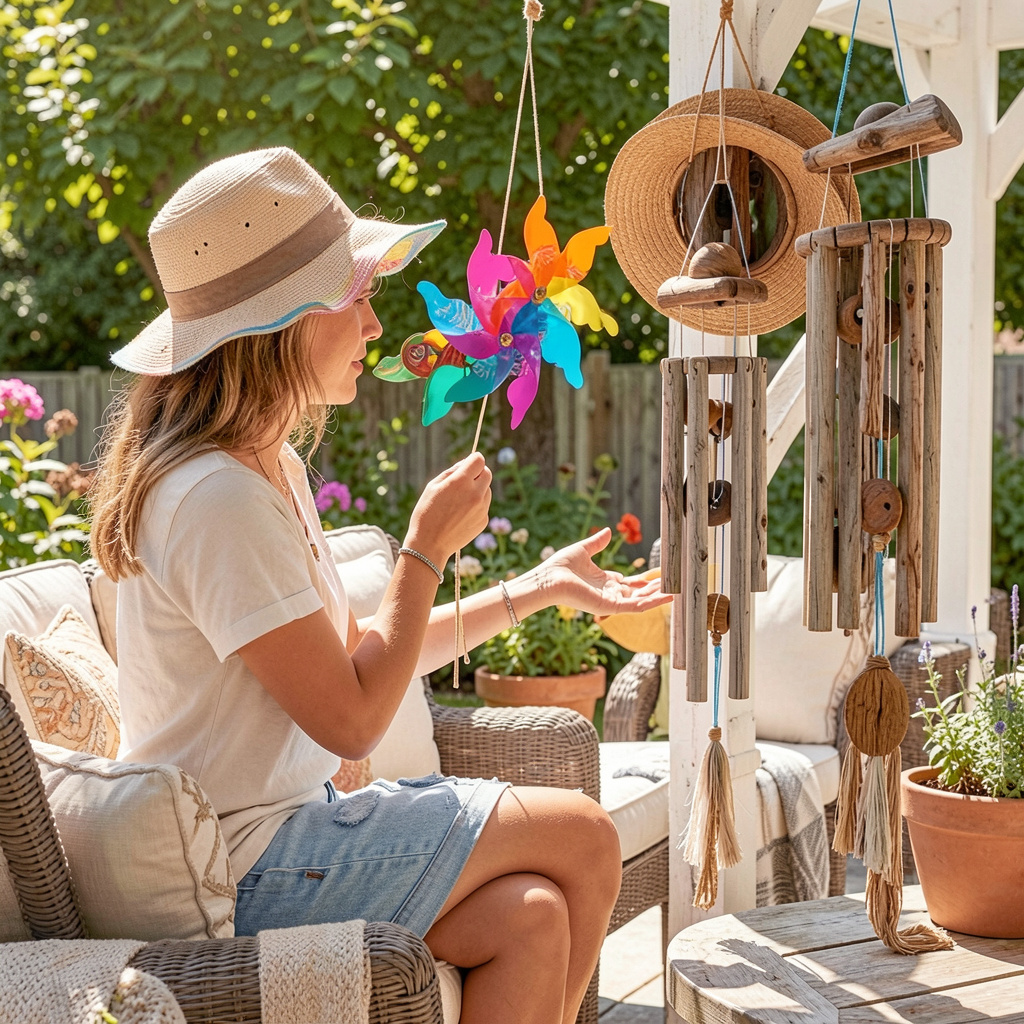
Choosing between wind spinners vs wind chimes comes down to how you want your garden to feel: visually animated, gently musical, or a bit of both. Both are classic garden accents that add personality to patios, porches, and planting beds, but they perform differently in real outdoor conditions like wind exposure, nearby neighbors, and seasonal weather.
At a glance: what each one does best
• Wind spinners create motion and shimmer — great when you want kinetic garden art that reads from a distance.
• Wind chimes add sound and subtle movement — ideal for cozy seating areas where you'll actually hear them.
• Best "right answer" for many spaces: place a spinner where it can be seen, and a chime where it can be enjoyed up close.
Visual impact: motion vs. sparkle
Wind spinners are all about dynamic visual payoff. They catch light, create a focal point, and make still landscapes feel alive, even on days when flowers aren't at their peak. If you have a wide front yard, a long side bed, or an area that needs height and structure, wind spinners can act like outdoor decor sculpture.
For example, the Large Wave Wind Spinner is a tall statement piece (32" x 7.75" x 85") with a double spinner design and ball bearings for easy spinning. At about 7 feet tall and priced at $247.50, it's the kind of kinetic garden art that can anchor a space the way a small tree or obelisk might.
Wind chimes, on the other hand, tend to read as detail-oriented decor. You'll notice them most when you're closer—on a porch, near a walkway, or beside a patio seating area. Many also add sparkle through glass accents. The Metal Celestial Wind Chime (2-Styles) pairs stainless steel and iron with glass prisms that catch sunlight, so you get a visual twinkle even before the breeze brings sound.
Sound profile: soothing, lively, or silent
This is the biggest practical difference in wind spinners vs wind chimes: spinners are silent, while chimes introduce sound — and sound carries.
If you love a peaceful garden but worry about constant noise (or you share fences with close neighbors), wind spinners are an easy win. They offer movement without changing the soundscape of your home.
If you enjoy a gentle soundtrack outside, chimes can make a space feel more restorative. Materials influence tone: glass tends to be lighter and more delicate, while metal can be brighter and more resonant. The Handblown Tiered Glass Wind Chime (29.53" H, $39.99) leans into a softer, artful presence with handblown glass tiers—often a good fit for those who prefer chimes that feel subtle rather than bold.
Tip: if you're sensitive to noise, hang chimes where they'll get occasional breezes rather than constant wind—like under a porch roofline instead of out in the open.
Placement and scale: match the piece to the space
Where you place these garden accents matters as much as which you choose.
Best places for wind spinners
• Open planting beds where the spinner can rotate freely and be seen from multiple angles.
• Front yard focal points to add height and year-round interest.
• Areas viewed from indoors (kitchen sink and living room windows) so you can enjoy the movement daily.
Large pieces need visual breathing room. The Colorful Orb Wind Spinner is 28" x 28" x 84" and priced at $292.50. It's designed to be viewable from any direction, making it a strong centerpiece in a circular bed or an island planting where you walk around it.
For smaller gardens—or for tucking into planters and narrow beds—scale down. The Mini Spiral Wind Spinner (2-Styles) (about 7.08" x 15.74") is an affordable option at $15.99 per style, available in Dragonfly or Tree of Life. Its size makes it easy to experiment with placement without committing to a major focal point.
Best places for wind chimes
• Porches and pergolas where they can hang safely and be enjoyed at ear level.
• Near seating (bench, patio table, swing) so the sound feels intentional.
• Along a walkway where you get a moment of sound as you pass.
Durability and materials: what holds up outdoors
Both spinners and chimes live in the elements, so materials and construction details matter.
Metal wind spinners are typically built for weather exposure, but quality varies. Look for sturdy stakes, smooth spinning mechanisms, and finishes that resist fading. The Large Wave Wind Spinner uses ball bearings for easy motion and a thick 5-pronged ground stake for stability, plus weather- and fade-resistant paint. It also recommends using SunGuard UV Protectant—a smart idea if your spinner sits in full sun for long stretches.
Wind chimes may combine metal, glass, rope, and other components. Stainless steel can be a solid choice for long-term durability. The Metal Celestial Wind Chime (2-Styles) includes stainless steel and a chain hanger with a C-hook, designed for easy hanging and resilience.
Maintenance: what you'll actually need to do
• Wind spinners: Occasionally wipe down dust/pollen, check the stake for straightness after storms, and ensure the spinner head rotates freely. If paint is exposed to intense sun, consider UV protectant.
• Wind chimes: Check knots/rope or chain connections, wipe glass prisms or tiers for clarity, and move chimes indoors during severe weather if you want to minimize risk.
In windy seasons, both benefit from a quick "safety check." A slightly loosened hanger on a chime or a leaning stake on a spinner is easy to fix early and prevents bigger issues later.
Pros and cons: deciding factors for real homes
Wind spinners
• Pros: silent; high visual impact; great for filling vertical space; strong as year-round outdoor decor.
• Cons: need room to spin; can tangle in nearby plants if crowded; premium large-scale spinners are an investment.
Wind chimes
• Pros: adds ambiance and a sense of calm; easier to hang in small spaces; can include reflective glass for extra sparkle.
• Cons: sound may not suit everyone; can be too active in strong wind; some materials (glass/rope) may need more protection.
Which is right for your space? Simple scenarios
• Bold focal point for a front bed: choose a taller spinner like the Colorful Orb Wind Spinner (28" x 28" x 84", $292.50) or the Large Wave Wind Spinner (32" x 7.75" x 85", $247.50).
• Small patio, subtle charm: a chime with visual detail, like the Butterfly Garden Wind Chime (37", $37.50), adds personality without taking up floor space.
• Love chimes but want gentler presence: consider the Handblown Tiered Glass Wind Chime (29.53" H, $39.99) for a more delicate visual and tone.
• Want to try kinetic garden art on a budget: start with the Mini Spiral Wind Spinner (2-Styles) (about 7.08" x 15.74", $15.99) and test where your yard gets the best breeze.
• Can't choose: place a spinner in an open bed for movement and a chime near seating for sound—separating them keeps the sensory effect intentional rather than busy.
Final takeaway: choose the experience you want outdoors
If you're drawn to strong visual outdoor decor, wind spinners deliver movement and structure, especially when you use larger pieces as garden accents that read from the street or across the yard. If you're building a soothing patio or porch atmosphere, wind chimes add a soundtrack and a personal, lived-in feel. In many gardens, the most balanced approach is to use both: one for motion, one for music, each placed where it shines.
Comments
Be the first to comment...