
Garden Yard Stakes vs. Garden Flags: Which Outdoor Décor Is Right for You?
- Posted on
- 0
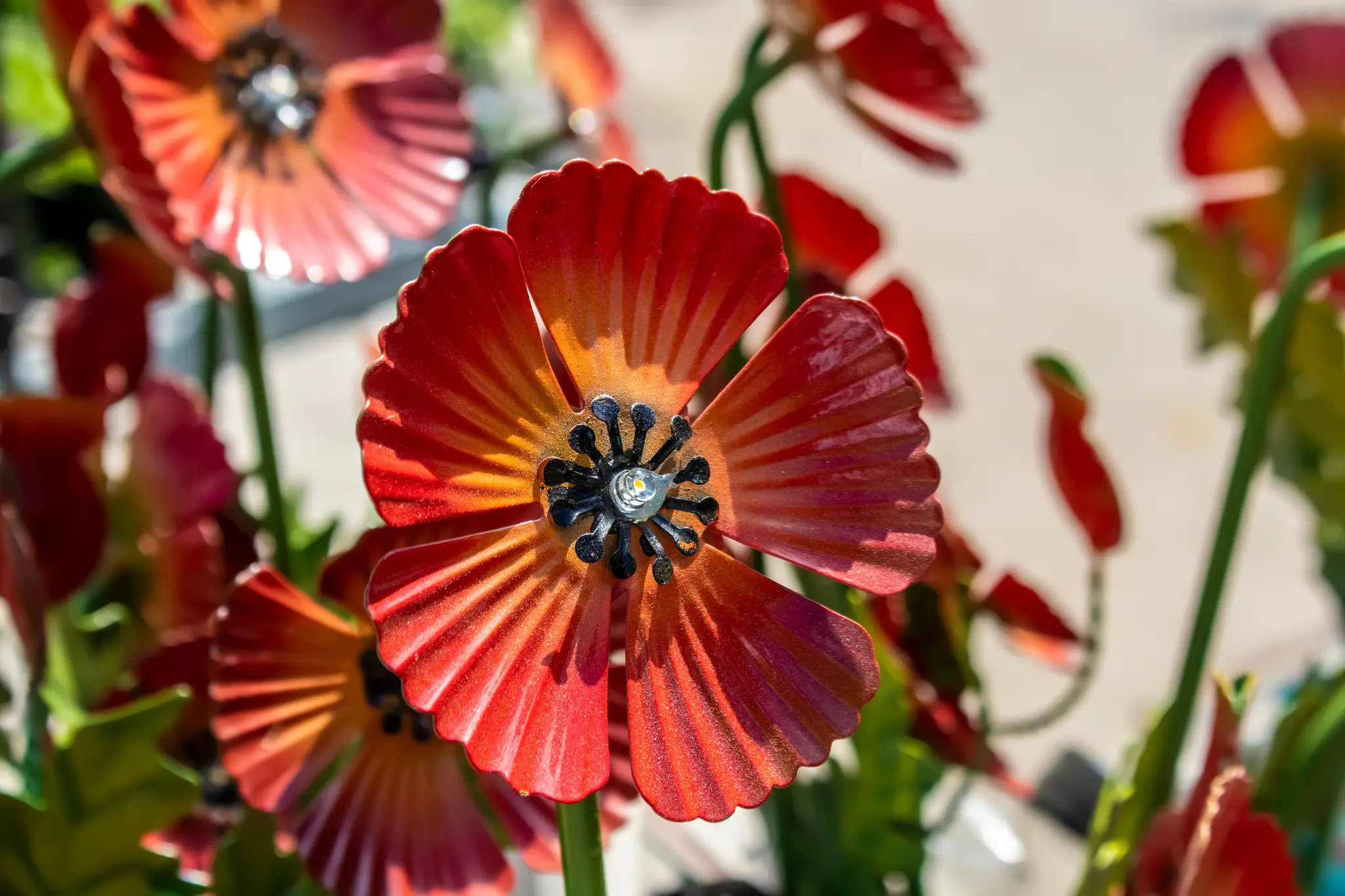
Both garden stakes and garden flags do the same basic thing: they give your yard a personality outside of what your plants alone can provide. But they do it differently — and knowing which one suits your situation makes the difference between a yard that looks put together and one that just has stuff in it.
Both garden stakes and garden flags do the same basic thing: they give your yard a personality outside of what your plants alone can provide. But they do it differently — and knowing which one suits your situation makes the difference between a yard that looks put together and one that just has stuff in it.
The short answer: stakes live in your beds and work close to the ground. Flags mount on poles, reach higher, and read from further away. Both are seasonal, both are swappable, and in many situations the best answer is actually to use both.
Browse our yard stakes and outdoor flags to see what's currently in stock, or keep reading to figure out which fits where.
How They're Different: The Basics
Before getting into the comparison, it helps to be clear on what each one actually is.
Garden yard stakes are standalone decorative pieces, typically powder-coated metal, pushed directly into garden beds, border soil, or containers. They don't require any additional hardware. The stake is part of the piece. Heights range from about 12 inches (a small bird silhouette at the front edge of a bed) all the way to 5 or 6 feet for tall art poles. They stay put until you pull them out.
Garden flags are printed fabric panels, typically 12.5" x 18", that hang from a separate two-piece metal pole and stake assembly. The pole stakes into the ground; the flag slides onto the horizontal arm and hangs freely. Because the flag moves in the wind, it creates motion. Because it's mounted higher (the pole typically reaches 36–42 inches), it reads from further down the street.
That structural difference, fixed-in-soil vs. fabric-on-pole, is what drives most of the practical differences between them.
Side-by-Side Comparison
| Garden Yard Stakes | Garden Flags | |
| Where they go | Directly in beds, borders, containers | Pole staked into lawn or bed edge |
| Typical height | 12 inches – 6 feet | 36–42 inches (flag reads at ~30 inches) |
| Movement | None — fixed | Yes — flag moves in wind |
| Visible from street? | Close to medium range | Medium to long range |
| Setup required | Push into ground | Assemble 2-piece pole, stake, slide flag on |
| Seasonal swap | Pull out, put new ones in | Slide flag off, slide new one on |
| Placement flexibility | Any soft soil — beds, pots, lawn edge | Lawn, bed edge, porch (with stand) |
| Weather durability | Metal holds up year-round | Fabric fades with UV; needs storage/rotation |
| Design range | Silhouettes, art poles, signs, solar, animals | Printed designs — virtually unlimited |
| Price range | $8 – $300+ (simple stakes to large custom pieces) | $15–$35 (flag) + $15–$40 (pole) |
Browse the full garden accessories section to compare both categories side by side.
When Garden Stakes Win
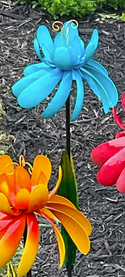
Stakes have the advantage whenever you need something that works within a planting bed rather than beside it.
Beds and borders. A flag pole in the middle of a flower bed blocks light, competes with plants, and takes up root space. Stakes slot in between plants without disturbing anything. They're purpose-built for that environment.
Container plantings. A metal stake pushed into a front-door container adds vertical interest and a design accent without requiring any additional structure. You can't do that with a flag.
Layered height schemes. Stakes let you create a front-to-back height gradient in a bed — short stakes at the edge, taller ones in the middle, art poles at the back. Flags don't give you that kind of gradation within a single bed.
Fine detail and close-up interest. A person walking up your front path will pass within a few feet of your front beds. Stakes reward that close viewing in a way fabric doesn't — the detail of a metal bird silhouette, the texture of a powder-coated finish, the craft of a well-made art pole. These things read well at arm's length.
Year-round durability. Quality metal stakes don't need to come in for winter, don't fade in the sun, and don't fray at the seams. For low-maintenance outdoor décor that simply stays put, stakes are the lower-effort option.
When Garden Flags Win
Flags earn their keep in situations where visibility, movement, or structure is the priority.
Street-level visibility. A garden flag mounted on a 40-inch pole reads from 50–100 feet away. Stakes at bed height, especially in a full garden, can get buried by plant growth in peak season. If your goal is curb appeal that registers from a passing car, a flag does that job better.
Porch and patio display. Most stake designs require soft ground. Flags with a freestanding holder work on any hard surface, a front porch, a concrete step, a patio. That flexibility matters for decorating surfaces where you can't push anything into soil.
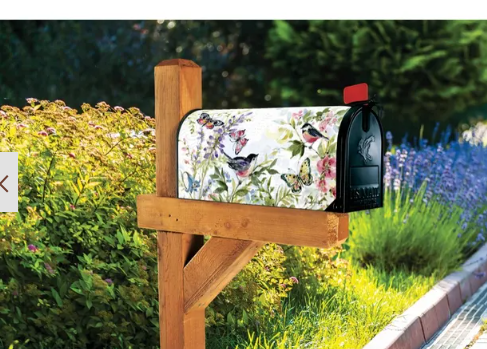
Mailbox and driveway entry. A flag bracket mounts directly onto a mailbox post with no ground preparation required. Pair it with a mailbox wrap for a fully coordinated mailbox display that carries a seasonal theme all the way to the street.
The visual motion factor. A flag moving gently in a breeze draws the eye in a way a fixed stake doesn't. In a yard that feels a little static, especially one where the plants aren't big enough yet to create movement, a flag introduces life.
Design range. Because flags are printed fabric, they can carry photographic-quality imagery, intricate patterns, text, and colors that would be impossible to reproduce in metal. Holiday-specific, sports team, pet-themed, personalized, if you want maximum design flexibility, flags win.
Using Both Together: The Case for Layering
The best-looking yards typically use both, and the key is understanding that they occupy different visual zones.
Stakes = close range, in-bed detail. Flags = mid-to-long range, pole-mounted presence. When they share a theme, same season, same color palette, same motif (birds, botanicals, Americana), they reinforce each other without competing.
A practical example: spring florals in the front border (stakes) + a matching spring flag at the mailbox (flag on pole) + a spring garden flag on the porch in a freestanding holder. Three points in the front yard telling the same seasonal story. The yard looks deliberate because the theme is consistent, not because any one element is doing heavy lifting.
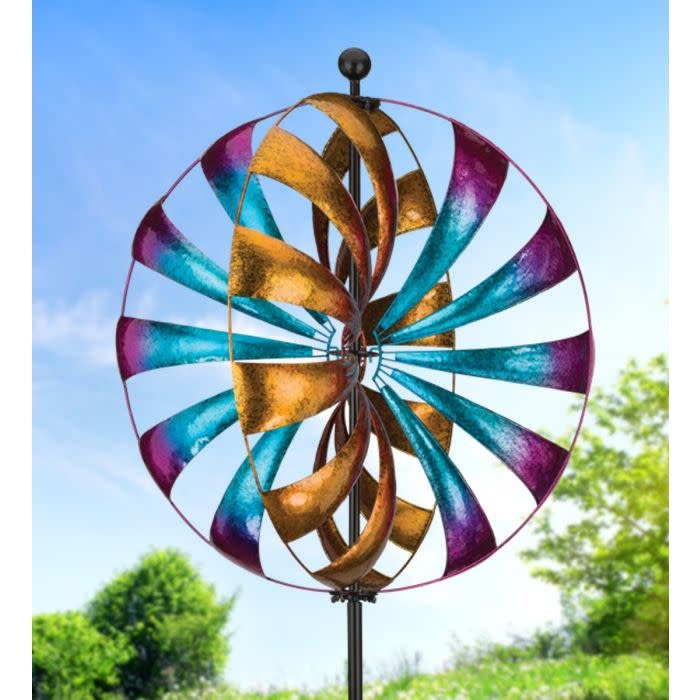
Garden spinners and wind chimes fit naturally into this layered approach, spinners and chimes add movement and sound alongside the visual elements that stakes and flags provide.
Quick Guide: Which Should You Choose?
If you're still deciding, here's a fast decision filter:
• Front bed or border → Stakes
• Porch or patio with no soil → Flag with freestanding holder
• Mailbox or driveway entry → Flag with bracket
• Visibility from the street is the goal → Flag
• Detail work at close range → Stakes
• You want something that stays out year-round without maintenance → Stakes (metal)
• You want maximum design variety and seasonal color → Flags
• You want both without overthinking it → Stakes in the beds, flag at the mailbox or entry point
Most yards have room for both. The question isn't usually either/or — it's figuring out which format to prioritize where.
FAQ
Do people still use garden flags? Yes, consistently, garden flags are one of the most popular categories in seasonal outdoor décor. The design range has expanded significantly in the last decade, covering not just holidays but themes like birds, botanicals, sports teams, pets, and personalized messages. Their popularity peaks in fall (especially Halloween and Thanksgiving) and around Christmas, but spring and summer flag designs sell steadily through the warmer months.
Are garden stakes or flags better for curb appeal? Flags generally win on pure street-level visibility because they mount higher and move in the wind, both of which draw the eye at a distance. Stakes create more refined, close-range interest in beds and borders. For maximum curb appeal, use both: a flag visible from the street paired with stakes that reward a closer look as someone approaches your front door.
How long do decorative garden flags last? A quality polyester flag with double-stitched edges, stored properly between seasons, typically lasts 2–4 years of outdoor use before fading or fraying becomes noticeable. UV exposure is the main enemy — flags in direct afternoon sun fade faster than those in partial shade. Bringing flags in during high winds and storing them flat (not rolled) extends their life significantly.
Can garden stakes and flags be used together? Not just can they — they're better together when they share a theme. The standard approach is stakes in the planting beds (close-range detail) and a flag on a pole at the mailbox, front walk, or porch entry (long-range presence). When both carry the same seasonal color palette or motif, they make the front yard feel cohesive rather than like two separate decorating efforts.
Where is the best place to put a garden flag? The most effective placements are the front walk (where it's seen by anyone approaching the house), the mailbox (visible from the street in both directions), and the front porch (where a freestanding holder works on any flat surface). Avoid placing flags directly inside dense planting beds — the pole competes for space with plants and can block sunlight. A bed edge or lawn position just beside the planting is better.
Comments
Be the first to comment...