

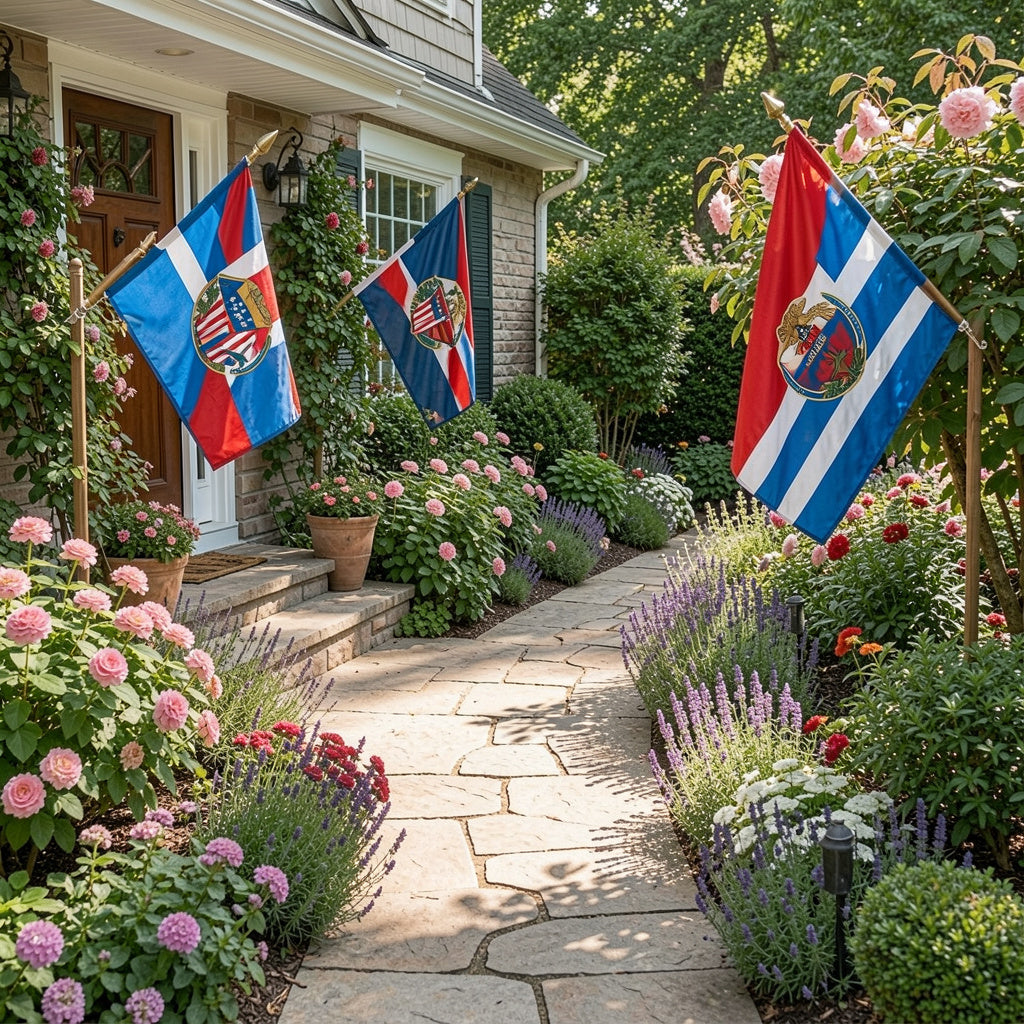
A garden flag is one of the cheapest ways to make a yard feel current. But a flag that droops, sits too low, or hides behind an overgrown shrub does the opposite. It reads as an afterthought.
The difference between a flag that looks intentional and one that looks accidental depends on three things: the pole, its placement, and the surrounding area. Get those right, and a $15 flag can carry your whole entry.
Browse our full range of outdoor garden flags to see what's in stock, or keep reading to set yours up so it actually gets noticed.
Start with the right pole or stand
Most decorative garden flags use a standard small size, around 12.5" x 18", and they need a separate pole or stand to hang from. The flag itself doesn't come with hardware, so the stand is the part that determines whether your display looks crisp or sloppy.
A few options, depending on where the flag is going:
• Standard garden flag stand. A two-piece metal pole that stakes into soil, with a horizontal arm the flag slides onto. This is the workhorse for beds, borders, and lawn edges. A sturdy powder-coated option like the Short Garden Flag Stand (18"w x 38"h, welded joints) holds a standard flag at a readable height and reuses season after season.
• Mailbox bracket. Mounts to a mailbox post; no ground prep needed. Good for street-facing visibility.
• Freestanding holder. Sits on a hard surface like a porch or patio where you can't push a stake into soil.
One small upgrade worth knowing about: an anti-wind clip or a weighted spinner at the top of the pole keeps the flag from wrapping around the rod every time it gusts. You'll find stands and display hardware alongside our other garden accessories.
Get the height and placement right
The most common mistake is hanging a flag too low, where plants swallow it by mid-season. Aim for the flag to read at roughly eye level from the approach, with the pole standing about 36 to 42 inches tall so the bottom of the flag clears low groundcover.
Placement habits that make a flag work harder:
• Face the walkway. Position the stand so the design reads head-on to anyone approaching the house, not edge-on.
• Give it contrast. Flags pop against mulch, stone, or simple greenery. Set against a busy flower bed with lots of competing color, even a great design disappears.
• Leave clearance. A few inches of open space around the flag lets it move in the breeze instead of catching on stems and branches.
• Mind the sprinklers. Occasional moisture is fine for outdoor-rated fabric, but constant spray shortens the life of any flag. Shift the stand out of a direct sprinkler path if you can.
Match the display to the spot
Different parts of the yard call for different setups.
• Front beds and borders. A staked stand at the bed's edge, angled toward the walk, is the classic placement. Keep it at the front or side of the planting so plants don't grow up and block it.
• The walkway. A flag positioned right where guests turn toward the door is seen at close range, making it the best spot for designs with finer detail.
• The mailbox. A bracket-mounted flag is visible from the street in both directions. Pair it with one of our mailbox wraps in the same theme, and the mailbox becomes a coordinated display rather than two unrelated pieces.
• Porches and patios. A freestanding holder works on any flat surface, so you can add a flag to a hard space where nothing stakes into the ground.
Style the area so it looks intentional
A flag on its own can look a little lonely. The fix is treating it as one part of a small scheme rather than the only accent.
• Keep a tight palette. Let the flag carry the color and keep everything nearby neutral: black planters, a natural doormat, simple greenery. The restraint is what reads as style.
• Repeat one element. If the flag has a sunflower or a star, echo that single motif once—on a wreath ribbon or a door hanger. One repeat is enough. More than that, it gets busy.
• Coordinate, don't compete. A metal flag stand sits in the same material family as metal stakes and spinners. A flag at the bed edge with a few coordinating pieces from our yard stakes collection nearby tells one consistent story across the front yard.
• Plan an easy rotation. Because swapping a flag takes seconds, you can change the look by season without touching anything else. Florals in spring, bright motifs and patriotic designs through summer, harvest tones in fall.
Keep flags looking new
A flag fades fastest when it's left out through every storm and heat wave without a break. A little routine care keeps colors bright for years.
Take the flag down ahead of a heavy storm and put it back up after, spot clean dust and pollen before grime sets in, and store flags flat or loosely folded once the season passes so they don't crease. Bring the metal stand indoors in the off-season too, since sitting in wet soil year-round wears it down faster than the weather does.
FAQ
What size pole or stand do I need for a garden flag?
Most decorative garden flags are a standard small size near 12.5" x 18", which fits a standard garden flag stand or arm. Match the stand to that size so the flag hangs flat without bunching or hanging past the pole.
How do I stop my garden flag from wrapping around the pole?
Add an anti-wind clip or a small spinner topper to the pole. Both let the flag rotate slightly and fall back into place instead of twisting tightly around the rod in a gust.
Where should I place a garden flag for the best curb appeal?
Anywhere it reads from the street and faces the natural approach to your home: the front bed edge, beside the walkway, or at the mailbox. Keep it clear of dense plantings that will hide it by peak season, and set it against mulch or greenery for contrast.
Can I display a garden flag without soil?
Yes. Use a freestanding holder on a porch, step, or patio, or a bracket on a mailbox post. These work on hard surfaces where a staked pole won't go in.
How high should a garden flag sit?
Tall enough that the bottom of the flag clears low ground cover and reads from a distance, usually with the pole around 36 to 42 inches. Too low and plants swallow it; too high and it looks disconnected from the bed.
Once your pole, placement, and styling are working together, a single flag can anchor the whole front of your home. Browse the full outdoor products range to coordinate stands, stakes, and seasonal pieces that carry the same look across your yard.


