
How to Style Silk Hydrangea Stems in Vases, Pitchers, and Urns
- Posted on
- 0

Silk hydrangea stems are one of the easiest ways to make a room feel finished. They’re lush, classic, and flexible enough for everything from a simple bedside bud vase to a dramatic foyer urn. The trick is treating them like real hydrangeas: choosing the right scale, using believable stem counts, and building shape before you worry about color.
Below you’ll find practical guidance for hydrangea stems for vases, along with pitcher and urn styling formulas, realistic proportions, and stem-by-stem tips that help create fake hydrangeas that look real.
Why hydrangeas work so well (even when they’re faux)
Hydrangeas are naturally “arrangement friendly.” One bloom can read as a full bouquet because the flower head is wide and rounded. That’s exactly why decorating with silk hydrangeas is so popular: you can get a high-impact look without needing dozens of stems.
Great silk hydrangea stems also have subtle variation in petal tone and veining. When you pair that realism with the right container and a few professional styling steps (angle, height, spacing, and a touch of greenery), you get artificial hydrangea arrangements that feel indistinguishable at a glance.
Start here: choose the right container for your stems
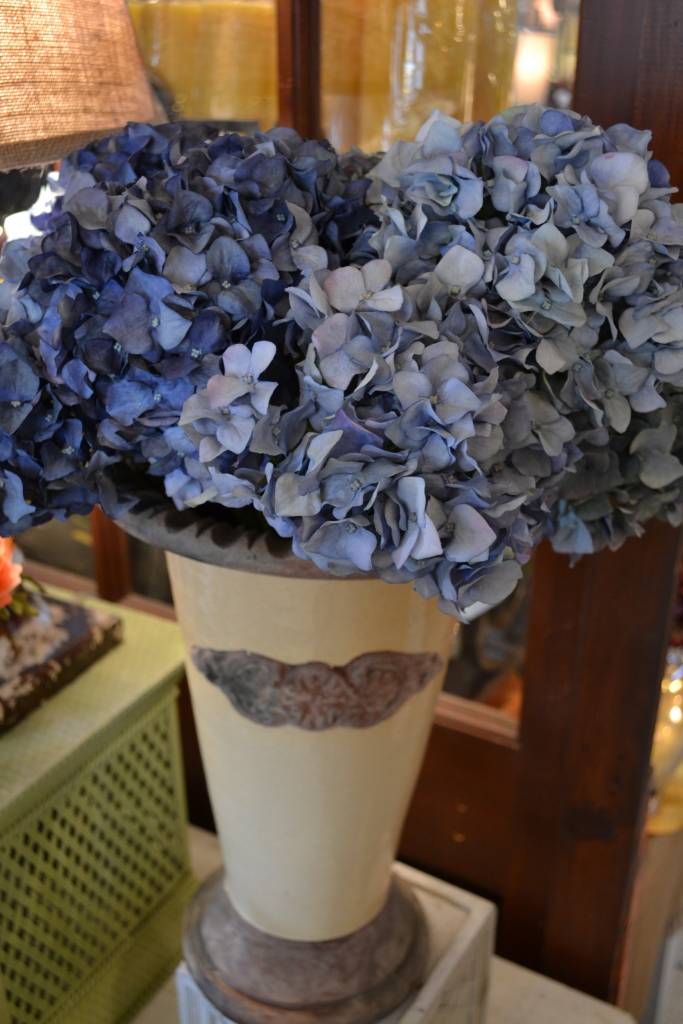
Before you trim a single stem, decide what role the arrangement plays. Are you filling a narrow spot on a console, creating a centerpiece, or anchoring an entry? Container choice determines scale, stem count, and silhouette.
• Vases create a classic bouquet look. They’re the easiest for hydrangea vase ideas because you can go tall and airy or short and full.
• Pitchers feel relaxed and collected. Faux hydrangeas in pitchers look especially natural in kitchens, breakfast nooks, or farmhouse-style spaces.
• Urns bring drama. Silk hydrangeas in urns can read formal or casual depending on bloom size and how much greenery you add.
If you’re shopping for a vessel, browse shapes first, then color. Neutrals (clear glass, white ceramic, aged metal, woven, stoneware) are the most forgiving and make the blooms look more realistic. You can explore container options here: Vases & Containers.
The most common question: how many hydrangea stems per vase?
Stem count depends on three factors: vase opening width, bloom size, and the look you want (airy vs. abundant). Use these guidelines as a starting point for how many hydrangea stems per vase, then adjust by eye.
Quick stem-count guide (by vase opening)
• Bud vase (1–2 inch opening): 1 hydrangea stem (or 1 hydrangea + 1 small greenery stem).
• Small vase (2–3 inch opening): 2–3 hydrangea stems.
• Medium vase (3–5 inch opening): 3–5 hydrangea stems.
• Large vase (5–7 inch opening): 5–8 hydrangea stems.
• Extra-large floor vase (7+ inch opening): 8–12 hydrangea stems, often with greenery for scale.
Rule of thumb: A rounded hydrangea arrangement usually looks best when the flower heads can lightly touch without being tightly compressed. If blooms look “stacked” on top of each other, you either need fewer stems or a wider opening.
Proportion rules that make faux hydrangeas look real
Most styling artificial hydrangeas comes down to proportion and placement. Use these easy rules to avoid the two most common faux-floral giveaways: awkward height and overly perfect symmetry.
• Height rule for vases: Aim for 1.5 to 2 times the height of the vase for a classic look. For a modern look, go closer to 1.25 times.
• Width rule: The arrangement should be about 1 to 1.5 times the width of the container at its widest point.
• Triangle rule: Create a gentle high point, then step down on both sides. Even a “rounded” hydrangea bouquet benefits from a subtle focal height.
• Imperfect rule: Avoid equal spacing. Turn some blooms slightly outward, angle a few, and vary height by 1–3 inches.
How to prep silk hydrangea stems so they arrange easily
Hydrangeas are big blooms, so a little prep goes a long way. These steps help your hydrangea stem arrangements hold shape and look natural.
-
Fluff the bloom. Gently separate petals and rotate the head to give it a rounded, airy shape. This removes shipping compression and adds realism.
-
Bend the stem gradually. Use both hands and create soft curves rather than sharp angles. Real hydrangea stems rarely grow perfectly straight.
-
Check bloom direction. Aim a few flower faces slightly downward or outward. When every bloom faces forward, it reads artificial.
-
Trim for the container. For tall vases, you may not need much trimming. For pitchers and low bowls, you’ll likely cut more to keep the arrangement stable and proportional.
If you want a premium, realistic option, start with high-quality stems like the Natural Touch Queen Hydrangea Stem or the Natural Touch Garden Hydrangea.
Styling hydrangeas in vases: three reliable formulas
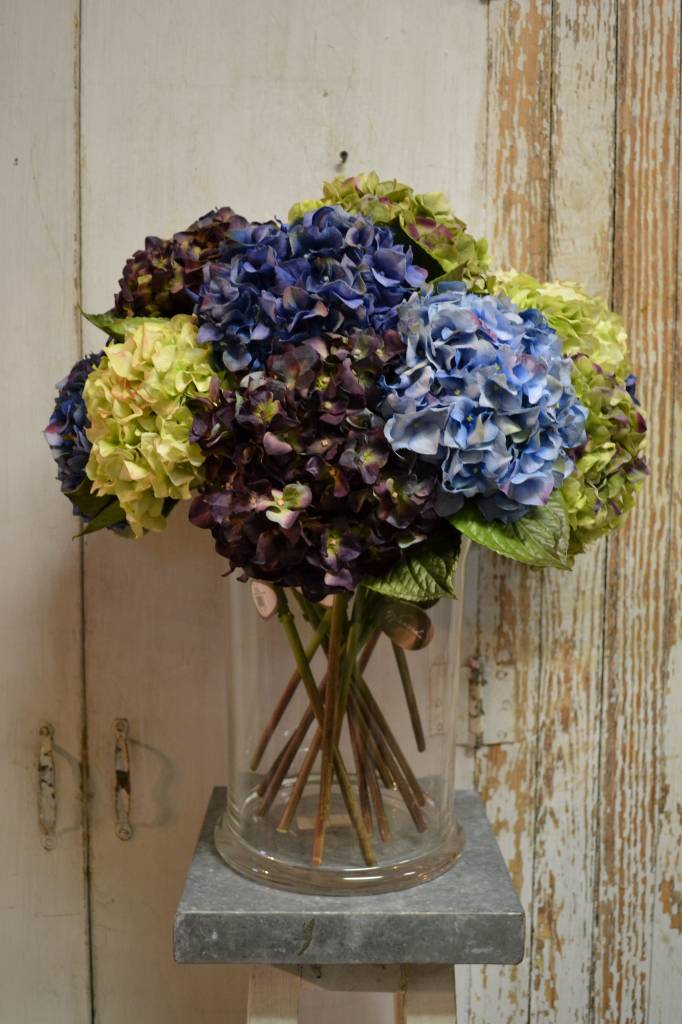
When people picture hydrangea vase ideas, they usually want one of these looks: a simple bouquet, a fuller centerpiece, or a mixed arrangement with greenery. Here are dependable “recipes” you can repeat all over the house.
1) The Classic Round Bouquet (all hydrangea)
Best for: entry tables, bedside tables, kitchen islands, dining sideboards.
• Container: medium vase with a 3–5 inch opening
• Stems: 3–5 silk hydrangea stems
-
Place your first stem slightly off-center and angle it outward.
-
Add two stems to create left and right width.
-
Add one or two stems to fill the back and soften any gaps.
-
Step back and rotate the vase; adjust so it looks good from the main viewing angles.
Realism tip: Keep one bloom slightly lower than the others so the top line isn’t perfectly even.
2) The Airy Vase Arrangement (hydrangea + negative space)
Best for: modern rooms, narrow console tables, small spaces where you want height without bulk.
• Container: tall vase with a narrower neck
• Stems: 2–4 hydrangea stems
-
Use fewer stems than you think you need. Let the vase show.
-
Stagger heights: one tall, one medium, one slightly shorter.
-
Angle at least one stem outward to create movement.
Realism tip: Don’t cram the neck. If the stems are tightly packed, the arrangement becomes stiff-looking. With faux hydrangeas, a little breathing room reads more lifelike.
3) The Garden-Mixed Look (hydrangea + greenery)
Best for: year-round styling, neutral rooms, and anyone who wants “just-cut” realism.
• Container: medium to large vase
• Stems: 3–7 hydrangea stems + 2–4 greenery stems
-
Start with greenery to establish height and a loose framework.
-
Add hydrangeas as the main mass, keeping most blooms at mid-height.
-
Finish with one or two blooms angled outward to soften the outline.
For greenery options that pair well with hydrangeas, explore: Greenery.
Faux hydrangeas in pitchers: relaxed, collected, and kitchen-friendly
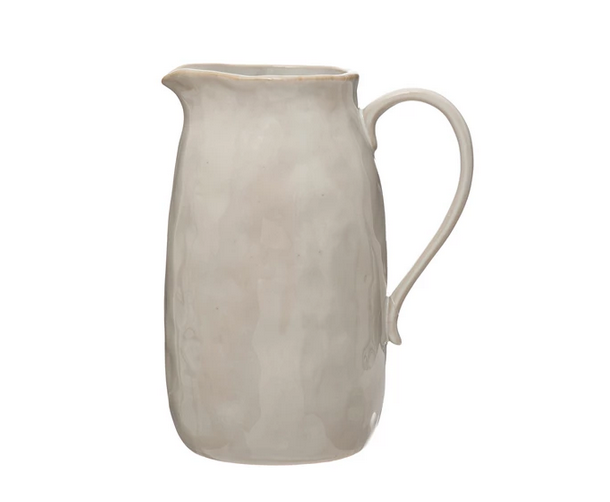
Pitchers naturally create a casual, “brought in from the garden” feeling. The handle adds charm, but it also changes the visual balance—arrangements often need a slight lean away from the handle so the display doesn’t look lopsided.
Pitcher styling method (simple and realistic)
• Container: ceramic or metal pitcher (medium size works best)
• Stems: 3–6 silk hydrangea stems
• Optional: 1–3 greenery stems for looseness
-
Create a forward-facing “fan.” Place your first two stems so blooms angle slightly toward the viewer.
-
Build the back height. Add one taller stem toward the back to keep the arrangement from looking flat.
-
Counterbalance the handle. If the handle is on the right, angle one bloom slightly to the left side to visually balance weight.
-
Soften with greenery. A small amount of greenery makes the pitcher look less “arranged” and more freshly gathered.
Realism tip: Pitchers look best when stems aren’t perfectly centered. A slight asymmetry is what gives faux hydrangeas in pitchers their charm.
Pitcher placement ideas
• Kitchen counter corner (choose a lower, wider silhouette so it doesn’t block sightlines)
• Open shelving (use 2–3 stems so it feels airy)
• Breakfast nook table (a soft blue or creamy white reads fresh year-round)
Silk hydrangeas in urns: how to get a designer, entryway look
Urns are where silk hydrangea stems really shine. Because urns are often wide and substantial, they need either more stem count or added height and greenery so the florals don’t look like they’re “sitting in a bowl.”
Two urn looks: compact vs. dramatic
1) Compact urn arrangement (tabletop)
• Best for: dining table centerpieces, coffee tables, console tables
• Stems: 5–9 hydrangea stems
• Greenery: 2–5 stems (optional but recommended)
-
Start with greenery around the rim to create a natural collar.
-
Add hydrangeas in a domed shape, keeping the highest bloom near the center.
-
Turn two blooms slightly outward to keep it from looking too “perfect.”
2) Dramatic urn arrangement (floor or large entry)
• Best for: foyers, hearths, large corners, staircase landings
• Stems: 9–15 hydrangea stems
• Greenery: 4–8 stems to add height and scale
-
Place taller greenery first to establish an overall silhouette.
-
Cluster hydrangeas in groups of 2–3 rather than spacing evenly.
-
Keep the center slightly higher and let the sides cascade outward.
Realism tip: A large urn arrangement should have depth. Make sure you’re placing stems toward the back as well as the front, even if it sits against a wall.
Hydrangea centerpiece ideas: low, lush, and practical
Silk hydrangea centerpieces are popular because they’re soft and full without being spiky or tall. For dining tables, the goal is a shape that encourages conversation—generally low and wide.
The “low dome” centerpiece
• Container: low urn, bowl, or compote
• Stems: 6–10 hydrangea stems (depending on bloom size)
• Optional accent: 2–4 greenery stems
-
Trim stems so blooms sit just above the rim and create a rounded dome.
-
Build from the center outward, checking the shape every few stems.
-
Add a little greenery at the base for a fresh-cut look.
Table-size tip: For a 60–72 inch table, one fuller centerpiece often looks better than several small ones. For very long tables, repeat two medium arrangements rather than one oversized piece.
Color and season: making hydrangeas feel right all year
Hydrangeas can read springy, coastal, classic, or wintery depending on shade and container. If you love the look but want it to feel seasonally appropriate, adjust one or two elements rather than changing everything.
• Spring/Summer: airy vase, lighter tones, a bit more greenery.
• Late Summer/Fall: deeper or muted hydrangeas, warmer containers, slightly fuller mass.
• Winter: crisp whites/creams with evergreen-like greenery, or a monochrome look in a metallic urn.
If you’d like broader guidance for rotating artificial florals through the year, this article is a helpful companion: How to Decorate Your Home with Artificial Flowers All Year Round.
Make fake hydrangeas that look real: finishing touches that matter
Small details are what elevate styling hydrangeas in vases from “pretty” to convincing. These are the same checks stylists use when creating faux hydrangea display ideas for photos and in-store vignettes.
• Vary the facing angle. Mix forward-facing blooms with a few angled slightly down and to the side.
• Mind the stem mechanics. If the stems spring upright and fight your shape, bend in gentle curves and use the container’s neck to hold angles.
• Avoid the “perfect circle.” A slightly irregular outline looks more like real cut hydrangeas.
• Add a touch of green. Even one or two greenery stems can make artificial hydrangea arrangements feel freshly gathered.
• Keep it clean. Dust petals occasionally and store stems in a box where blooms aren’t crushed.
Common hydrangea-styling mistakes (and quick fixes)
Mistake: The arrangement looks top-heavy
Fix: Trim stems shorter or switch to a wider container. Add a little greenery at the base to visually “anchor” the blooms.
Mistake: Blooms look crowded and stiff
Fix: Remove one or two stems and re-angle what remains. Hydrangeas should lightly touch, not press tightly together.
Mistake: It looks like a ball sitting in a vase
Fix: Increase height variation. Raise one bloom, lower one bloom, and angle a couple outward to create a natural silhouette.
Mistake: The pitcher arrangement feels lopsided
Fix: Counterbalance the handle by placing one bloom slightly opposite, or add one small greenery stem to the lighter side.
Where to find stems and mix-and-match options
If you’re building your collection, start with a few versatile silk hydrangea stems in a color you love, then add complementary greenery. You can browse hydrangeas here: Silk Hydrangeas, or explore coordinating stems across: Natural Silk Florals.
Simple cheat sheet: pick a container, follow a formula
• Medium vase: 3–5 stems for a classic bouquet.
• Tall narrow vase: 2–4 stems for an airy look.
• Pitcher: 3–6 stems, slightly asymmetrical, balanced away from the handle.
• Tabletop urn: 5–9 stems plus a greenery collar.
• Large floor urn: 9–15 stems plus taller greenery for scale.
Once you know your stem count and silhouette, the rest is just adjusting angles and height until it feels effortless. Hydrangeas are forgiving, and that’s what makes them such a staple for hydrangea stems for vases, pitchers, and urns—beautiful results without complicated mechanics.
Comments
Be the first to comment...