
How to Decorate with Artificial Ferns for a Fresh, Lush Look Indoors
- Posted on
- 0

Ferns are one of the easiest ways to add a fresh, layered look indoors. Their fronds soften hard edges, fill empty corners, and make a space feel more “finished” without shouting for attention. The only catch with real ferns is that they can be picky about light, humidity, and watering. That’s why decorating with artificial ferns has become a go-to move for designers and homeowners who want consistent color and fullness year-round.
This guide covers practical, realistic ways to use faux ferns for home decor—how to choose fake ferns that look real, where to place artificial ferns for the most natural effect, and simple artificial fern styling tips for different rooms.
Why artificial ferns work so well indoors
Ferns read as “real” from a distance because their leaf shape is complex and naturally irregular. Good-quality faux ferns mimic that variation, which makes them ideal for decorating with faux greenery in both modern and traditional homes.
• They add softness and movement: The drape of fronds breaks up straight lines from furniture, tile, and cabinetry.
• They’re naturally lush: Ferns provide volume quickly, so you can fill space without needing multiple plant types.
• They’re flexible: You can use them in arrangements, baskets, hanging planters, or tucked into bookshelves.
• They’re consistent: Artificial ferns indoors stay full and green in low light, dry rooms, or high-traffic areas.

How to choose fake ferns that look real
Not all faux ferns are created equal. If you want fake ferns that look real, focus on details that mimic nature: subtle color shifts, varied frond lengths, and a believable stem structure.
Look for natural variation in color and texture
Real ferns aren’t one flat green. The best faux options include tonal variation—deeper greens toward the base, lighter tips, or a soft matte finish instead of shiny plastic. Texture matters too: “soft touch” materials tend to photograph and style more like the real thing.
Check the frond shape and density
Fern fronds should feel airy, not like a solid sheet. Pieces that have layered fronds and a slightly irregular outline will blend better into a room. If a fern looks too perfectly symmetrical, it can read artificial at a glance.
Choose the right fern type for the job
Different fern varieties give different vibes. A Boston fern feels classic and overflowing; leather leaf styles are flatter and great for mixing; forest ferns read soft and woodland-like.
• UV Treated Boston Fern for a traditional, cascading “porch-to-living-room” look
• Leather Leaf Fern Bush for arranging and adding structure in mixed greenery
• Soft Touch Forest Fern Bush for a softer, more naturalistic feel in vignettes
Artificial fern styling tips (so they don’t look “plopped down”)
The difference between a convincing plant moment and a fake-looking one is usually styling. Use these artificial fern styling tips to make faux greenery feel integrated.
1) “Fluff” and shape every stem
Artificial ferns are shipped compressed. Before placing them, bend and separate fronds so they arc outward the way real ferns grow. Angle a few fronds forward, some to the sides, and let a couple drape down for a natural cascade.
2) Use an inner pot and top-dress the surface
If your fern comes in a basic pot, drop it into a heavier decorative container. Then hide the mechanics: add Spanish moss, preserved moss, or small bark pieces to cover any foam or plastic. This one step makes faux ferns for home decor instantly more believable.
3) Get scale right: bigger is often better
A fern that’s too small can look like an afterthought. In most rooms, slightly oversized greenery reads intentional and more like a real plant. If you’re unsure, choose a fuller fern and give it breathing room.
4) Repeat greenery in the room
A single fern can look isolated. Repeat green tones elsewhere—another small plant, a botanical print, or a subtle green pillow—so the fern feels like part of the overall palette.
5) Mix fern textures in arrangements
One fern type can look flat if used everywhere. Combine a feathery fern with a flatter leaf shape (like leather leaf) for depth. This is especially effective in artificial fern arrangements where you want a natural, collected look.
Where to place artificial ferns for the most natural look
If you’re wondering where to place artificial ferns, think about the spots where a real plant would thrive—or where you wish one would. Ferns are especially good at softening transitions: corners, thresholds, and the edges of built-ins.
• On a plant stand near a window: Even if it doesn’t need light, it looks right there.
• In a corner that needs height: Choose a fuller fern in a substantial container.
• On top of cabinets: Let fronds cascade to break up blank vertical space.
• In open shelving: Use smaller fern bushes to add softness between books and ceramics.
• In high-humidity “problem” areas: Faux ferns are perfect where real plants struggle (or where you don’t want to risk water damage).

Room-by-room indoor fern decor ideas
Below are practical indoor fern decor ideas that work with a range of styles—from cozy traditional to clean modern. Use them as templates and adjust the container, size, and placement to your space.
Faux ferns living room: make the space feel layered
In living rooms, ferns work best when they’re used to soften furniture lines and fill visual gaps. Aim for one “anchor” fern and one or two smaller accents.
• Corner anchor: Place a fuller fern in a basket or ceramic pot near a sofa or reading chair. Let fronds spill slightly toward the seating area.
• Fireplace or console balance: Use a medium fern on one end of a console and balance it with a stack of books or a lamp on the other end.
• Shelf styling: Tuck a smaller fern bush into a shelf so fronds drape over the edge. This breaks up rigid shelf lines and makes built-ins feel more relaxed.
For faux ferns living room styling, keep the container finish aligned with your décor: woven textures for casual, aged terracotta for rustic, matte ceramic for modern, and brass or black for a more tailored look.
Artificial ferns bathroom: greenery without the stress
Bathrooms are one of the best places for artificial ferns indoors. Even though real ferns may like humidity, bathrooms often have inconsistent light and temperature—conditions that can cause real plants to decline. Faux options deliver the spa-like feel without maintenance.
• Vanity corner: A small fern in a simple pot softens stone countertops and mirrors.
• On open shelving: Place a fern beside rolled towels and apothecary jars for a clean, fresh look.
• Bathtub ledge (if wide enough): Use a compact fern that won’t feel crowded. Keep it away from direct splashes to prevent dust and water spots on fronds.
When styling artificial ferns bathroom spaces, choose containers that can handle moisture—ceramic, sealed stone, or metal. If you’re using a basket, place a liner inside to protect it from humidity.
Fake ferns for entryway: a welcoming first impression
An entryway benefits from greenery because it immediately sets a warm tone. Fake ferns for entryway styling work especially well in narrow spaces because fronds add fullness without the hard silhouette of a topiary.
• Bench vignette: Pair a fern with a tray for keys and a framed photo or mirror above.
• Stair landing: Add a fern on a small stand to bring life to an often-forgotten spot.
• Under a console table: Place a fuller fern in a basket underneath and keep the tabletop styling minimal.
For high-traffic areas, pick a spot where fronds won’t be brushed constantly (which can bend them over time). If the entry gets strong sun through glass, consider a UV-treated option.
Kitchen and dining: soften hard finishes
Kitchens have a lot of sleek surfaces—stone, tile, stainless steel. Ferns add organic contrast.
• Above cabinets: Let fronds cascade to reduce the “empty box” feel.
• Countertop corner: A compact fern is a great alternative to a fruit bowl if you prefer an uncluttered counter.
• Dining centerpiece: Use a low, wide container with mixed greenery so guests can see across the table.
If you’re creating artificial fern arrangements for a dining table, keep them lower than you think you need—ferns look lush even in shallow vessels.
Bedroom: bring calm, not clutter
In a bedroom, greenery should feel soothing. Choose a softer fern and keep the styling simple.
• Dresser top: A medium fern next to a lamp adds height variation.
• Nightstand alternative: If your nightstand is wide, a small fern can replace extra décor that feels busy.
• Reading nook: Add a fern near a chair to make the corner feel intentional.
Home office: reduce “hard angles” on camera
Ferns are excellent for offices because they soften monitor edges and shelving lines. If you take video calls, a fern in the background adds depth and color without distraction.
• Behind the chair: Place a fern on a credenza or small table for a natural backdrop.
• On a bookshelf: Let fronds drape slightly to break up rows of books and binders.
How to use faux Boston ferns like a designer
Faux Boston ferns are known for their full, arching fronds and classic “overflowing” shape. They’re ideal when you want maximum impact with minimal effort.
• Go classic with a pedestal or urn: A Boston fern looks especially convincing when elevated in a substantial container.
• Create a cascading moment: Place it on a high shelf, atop a cabinet, or in a hanging planter where fronds can drape naturally.
• Use pairs for symmetry: Two matching Boston ferns can frame a fireplace, a doorway, or a large console.
If you need a piece that can handle brighter areas, a UV-treated option like the UV Treated Boston Fern can be a smart choice for sunrooms, bright kitchens, or near glass doors.
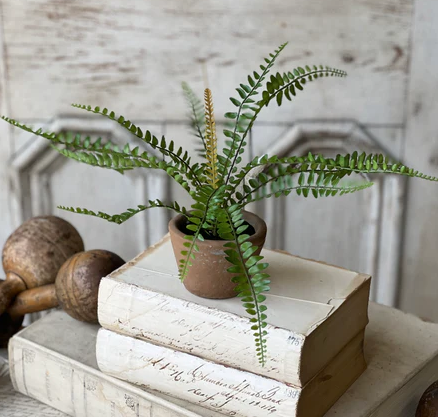
Artificial fern arrangements: simple formulas that always look good
Arrangements are where faux greenery really shines. With a few stems, you can build a custom look that fits your container and your space.
The “fern + filler” formula
• Base: 1–2 fuller fern bushes for volume
• Filler: 2–4 stems of smaller greenery to add texture and cover gaps
• Finish: Moss on top to hide mechanics
A structured option like the Leather Leaf Fern Bush works well as a base because it layers neatly with other greens.
The “low bowl centerpiece” formula
• Choose a wide, shallow vessel so the arrangement spreads instead of shooting upward.
• Use shorter fern pieces and angle fronds outward like a mound.
• Keep height low for dining tables and coffee tables.
The “shelf tuck” formula
• Pick a compact bush with soft fronds.
• Place it slightly off-center and let a few fronds drape over the shelf edge.
• Balance with a hard object like a framed photo or pottery for contrast.
For softer, more natural tucks, the Soft Touch Forest Fern Bush can be easier to blend into styled vignettes.
Containers that make faux ferns look more realistic
The container does a lot of the visual work. Even the best faux fern can look less convincing in a lightweight plastic pot. If you want a quick upgrade, choose a heavier vessel and top-dress the surface.
• Woven baskets: Great for casual, cozy rooms and entryways
• Stoneware and ceramic: Ideal for kitchens, bathrooms, and modern spaces
• Terracotta: Perfect for earthy, Mediterranean, or cottage styles
• Metal planters: Works well with industrial or tailored interiors
If you’re swapping containers, start with a browse of Containers & Vases and choose one that’s slightly larger than the pot your fern comes in. That extra room helps you hide the inner pot and add moss for a finished look.
Keeping artificial ferns indoors looking fresh
Artificial greenery still needs a little care. Dust and buildup are what usually give away faux plants.
• Dust regularly: A microfiber cloth or soft duster keeps fronds crisp.
• Deep clean occasionally: Use cool air from a hair dryer on low or a gentle rinse if the fern’s materials allow it. Let it dry fully before placing it back.
• Avoid постоян rubbing: In tight walkways, move the fern slightly back so fronds don’t get bent or flattened.
• Rotate for realism: Every few months, rotate the container so the fern doesn’t look “posed” the same way forever.
Quick ideas if you’re just getting started
If you’re new to styling fake ferns, start small and build from there. These are easy, high-impact moves that work in most homes.
-
Add one lush fern to a room that feels flat (often the living room or entryway).
-
Upgrade the container and top-dress with moss so it looks planted.
-
Repeat greenery once more in the same space for a cohesive look.
When you’re ready to explore more options, you can browse the Artificial Ferns collection, or mix ferns with other greens from the broader Greenery selection for even more texture. For layered, seasonal-friendly styling, pairing ferns with stems from Natural Silk Florals can create arrangements that feel custom and collected.
With a few thoughtful choices—realistic texture, a substantial container, and natural shaping—decorating with artificial ferns can give you that fresh, lush look indoors in a way that stays effortless all year.
Comments
Be the first to comment...