

The Last Straw Blog
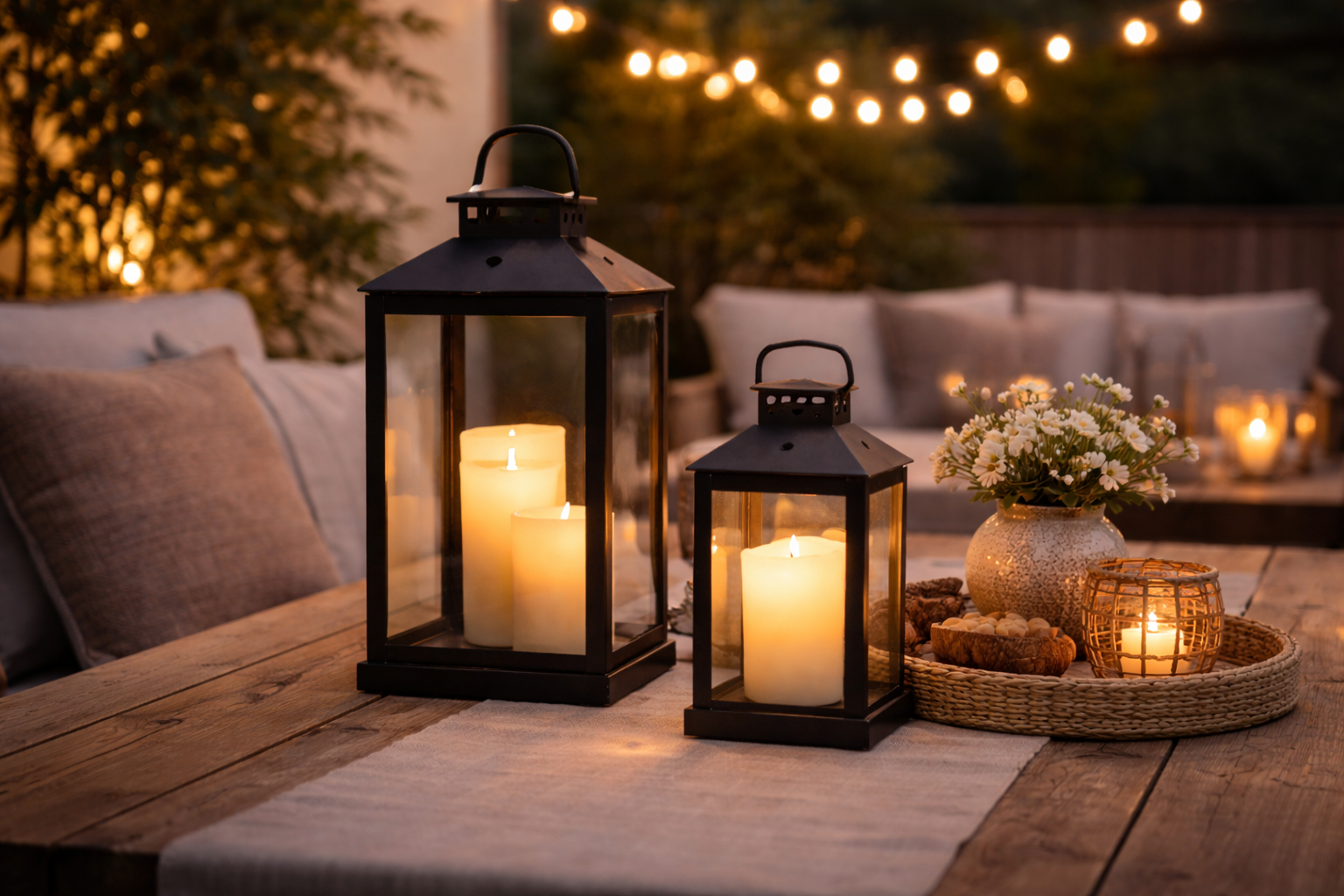

Indoor & Outdoor Lighting Ideas to Transform Your Patio and Porch
A practical guide to patio and porch lighting that blends ambiance, safety, and style. Learn how to layer string lights, lanterns, LEDs, and solar path lights to make outdoor spaces usable day and night—plus seasonal styling ideas.
Learn more
How to Arrange Silk Flower Stems So They Look Real
Learn how to arrange silk flower stems so they look real with better stem prep, natural bending, layered placement, and the right mix of blooms and greenery. This guide covers choosing high-quality silk florals, varying heights, anchoring stems securely, adding realistic finishing touches, and picking containers that elevate the final look.
Learn more
Silk Stems 101: How Many Stems Do You Need for Different Vases?
This guide shows you how many silk stems you need for different vase sizes so your arrangements look full, balanced, and realistic. You’ll get simple proportion rules (height ratios), stem count ranges for tall/medium/short vases, and quick arranging tips like using odd numbers and varying stem heights.
Learn more
Seasonal Decorating with Silk Stems: Spring, Summer, Fall & Holiday Ideas
Seasonal decorating with silk stems makes it easy to refresh your home year-round. Get spring, summer, fall, and holiday ideas for centerpieces, wreaths, window displays, outdoor arrangements, and festive touches—beautiful, low-maintenance, and always in season.
Learn more
Real vs Artificial: Why High-Quality Silk Stems Are Worth the Investment
High-quality silk stems give you realistic, long-lasting floral décor without the short lifespan, upkeep, and repeat cost of fresh flowers. You get year-round beauty, easy seasonal swaps, allergy-friendly styling, and better long-term value—especially when paired with the right vase and arranged with natural curves and varied heights.
Learn more
How to Mix Silk Stems with Greenery and Branches for Full Arrangements
Why greenery and branches are the secret to “full” silk arrangements If you’ve ever built an arrangement with only blooms and felt like something was missing, it usually is: structure. In nature, flowers don’t float in a vase alone, they’re supported by foliage, branching lines, and little transitional pieces. The same principle makes artificial flower arrangements look believable and abundant. Mixing silk flowers and greenery adds three things that blooms can’t do by themselves: • Volume: leafy forms fill space efficiently, so you don’t need an unrealistic number of flowers. • Movement: branches and airy stems create directional flow instead of a “ball” of flowers. • Realism: varied textures and layers mimic how plants grow together outdoors. This guide focuses on how to combine silk stems, faux greenery with flowers, and branches so your work looks balanced from every angle—whether you’re styling a dining table centerpiece, an entryway statement piece, or a mantle arrangement. Start with a plan: size, style, and where it will live Before you cut or bend anything, make three quick decisions. They prevent the most common mistake in how to arrange silk flowers: building a pretty front view that falls apart from the side. • Placement: Will it be viewed from all sides (round) or mostly from the front (one-sided)? • Scale: Your arrangement should feel proportional to the furniture. A good rule is that the total height of arrangement + vase is about 1.5–2 times the vase height for most surfaces, and taller for floor vases. • Personality: Decide “structured” (tight, symmetrical) or “garden” (airy, asymmetrical). Branches and ferns naturally lean garden-style, while hydrangeas and roses can be styled more formally. If you’re pulling stems as you go, it’s easy to end up with competing shapes. A simple plan makes your choices feel intentional. Choose the right ingredients: stems, greenery, and branching accents Think of your materials as a recipe. For most full floral arrangements, you want a combination of focal blooms, supporting flowers, greenery, and “line” elements like branches. When you’re working with silk stems and branches, variety is what keeps things natural. 1) Focal silk stems for arrangements Focal flowers are the first thing you notice: hydrangeas, peonies, magnolias, ranunculus, large dahlias. Pick 1–2 focal types to avoid visual clutter. If you want a classic, lush base, a hydrangea is an easy anchor—especially a natural-touch option like the Natural Touch Queen Hydrangea Stem. 2) Greenery that fills without stealing the show For mixing silk flowers and greenery, choose at least two greenery textures: • A filler greenery: something that creates mass (eucalyptus, pittosporum, salal). • A texture greenery: something with a distinct look (ferns, delicate vines, wispy sprays). Seeded eucalyptus is a favorite because it adds soft fullness and a muted color that complements almost any bloom. A great example is the Seeded Eucalyptus Spray. For a more layered, realistic look, add ferns—see the Ferns collection or a staple like the Leather Fern Bush. 3) Branches and berries for shape and seasonal interest Branches act like the “skeleton” and the directional lines in your design. They’re key when you want height, asymmetry, or a more natural silhouette. Berry branches for arrangements add small points of color and a subtle woodland feel that works especially well in fall and winter styling, but can also read fresh and botanical in spring. If you’re shopping specifically for these accents, browse Berries & Branches for options that create movement without adding bulk. A simple formula for balanced proportions There isn’t one perfect ratio, but the following guideline helps most people create realistic silk arrangements without overbuying or overstuffing: • 40–50% greenery (base + texture) • 25–35% focal + supporting flowers • 15–25% branches/berries/line elements Why so much greenery? Because it does the heavy lifting: it builds the body of the arrangement, hides mechanics, and gives your blooms a believable context. If you’ve ever wondered why professional-looking pieces seem “full” without being crowded, it’s usually because the greenery is doing more than the flowers. Tools and mechanics that make silk arranging easier You don’t need a full floral studio, but a few basics make silk flower arrangement tips much easier to execute cleanly: • Wire cutters: for trimming stems cleanly (regular scissors will struggle). • Floral tape or stem wrap: to bundle picks or cover joins. • Floral foam or a pin frog: helpful in wide containers (optional). • Clear tape grid: perfect for vases—crisscross tape across the opening to create “cells” that hold stems in place. • A suitable container: the shape of the vessel determines the shape of the design. If you want options, see Vases & Containers. One underrated tip: add weight to tall or narrow containers (glass stones, sand, or filler) so heavier branches don’t tip the arrangement forward. Step-by-step: how to combine silk stems, faux greenery, and branches This method works for most sizes—from a coffee table piece to a large console arrangement. Adjust quantities, but keep the order. The order is what builds fullness without chaos. Step 1: Set your “line” with branches first Start with 2–5 branchy stems (more for large vessels). Place them so they create an outline: • One taller line to establish height. • One or two side lines that widen the silhouette. • One forward-leaning line (especially in one-sided designs) to create depth. Branches should not be evenly spaced like a fan. Slightly cluster them and vary their angles. If a branch looks too stiff, gently bend at several points rather than making one sharp curve. Step 2: Build a greenery “nest” to create fullness Next, add your filler greenery to create the body. This is where silk flowers with faux greenery starts to look intentional instead of “stems in a vase.” • Place greenery low first to cover the rim and mechanics. • Then add mid-level greenery that reaches into the arrangement and supports where blooms will sit. • Rotate the container and check for holes. Use at least two greenery types if possible. For example, seeded eucalyptus gives soft volume, while a fern adds distinctive fronds and natural direction. Step 3: Place focal blooms in a triangle (or a loose cluster) For most combining silk florals successfully, avoid placing the biggest blooms in a perfect ring. Instead: • Choose 3 main focal points and form a triangle (one higher, two lower), or • Create a cluster that’s slightly off-center for a garden look. Angle some blooms outward and a few inward. Real flowers rarely face straight up in unison. Step 4: Add supporting flowers and transitional pieces Supporting stems are smaller blooms or secondary florals that bridge the gap between focal flowers and greenery. They keep the arrangement from looking like “big flowers stuck in leaves.” Tuck them near focal blooms and let a few reach out slightly to soften edges. This is also where berry accents shine. A few berry branches for arrangements can echo the flower color or add contrast without overpowering the design. Step 5: Finish with texture greenery (especially ferns) Texture greenery is your final realism layer. Ferns for flower arrangements are particularly effective because their shape naturally drapes and points, which breaks up round forms like hydrangeas. • Use ferns to cover any awkward stem joins. • Let a frond or two extend beyond the main silhouette for a relaxed look. • Avoid placing all fern tips at the same height—stagger them. Step 6: Edit from every angle Editing is the difference between “pretty” and “believable.” Walk around your arrangement (or spin it) and look for: • Gaps: fill with greenery first, not more focal blooms. • Clumps: separate stems so they have breathing room. • Hard lines: soften with a fern, vine, or airy spray. • Uniformity: vary heights and angles; nature is irregular. Design principles that make faux look real These are the quiet details that elevate silk stems for arrangements from “decor” to “did you cut those?” Vary texture and finish Pair matte leaves with lightly glossy leaves. Mix small leaves with broad leaves. Combine smooth petals with something slightly ruffled. That contrast reads as natural complexity. Use color depth, not just color matching A realistic palette usually includes: • A main color (your focal bloom color) • A supporting tone (a lighter or darker version) • A neutral green base • One subtle accent (berries, a branch tone, or a muted filler) When everything is the exact same hue, it looks manufactured. Slight variation is your friend. Let some stems “misbehave” Perfect symmetry is the quickest giveaway in artificial flower arrangements. Even in a formal piece, include a few elements that extend, arc, or tilt gently. Branches are ideal for this—just keep the movement controlled so it looks intentional. Hide mechanics with layered greenery If you can see straight down into the vase and notice bare stems, add a collar of greenery at the rim. Ferns and eucalyptus are excellent at disguising mechanics without looking bulky. Three arrangement recipes you can copy Use these as starting points and adjust for your container size. The goal is to show how mixing silk flowers and greenery changes the finished look. 1) Lush hydrangea + eucalyptus centerpiece (classic and full) • Focal: 3–5 hydrangea stems (try a natural-touch hydrangea for realism) • Greenery base: 4–8 eucalyptus sprays • Texture: 2–4 fern pieces tucked low and mid-level • Line: 1–3 subtle branches for height (optional) This is a great “everyday” formula because it looks generous without needing many flower varieties. 2) Branch-forward entry arrangement (airy and architectural) • Line: 5–9 branches (mix bare and budded/leafy if you can) • Greenery: 3–6 mixed greenery stems to create a nest at the base • Flowers: 3–5 medium blooms placed in a loose cluster • Accent: 2–4 berry stems for seasonal color This style is especially effective in taller vessels and looks high-end because it emphasizes shape and negative space. 3) Fern and berry woodland mix (textured and seasonal) • Greenery base: 3–6 eucalyptus or similar filler • Texture hero: 4–8 fern stems (different sizes if possible) • Accent: 3–6 berry branches for arrangements • Optional blooms: 1–3 small, muted flowers to soften (cream, soft blush, or deep burgundy depending on season) This is a strong choice for fall-to-winter styling because berries and ferns create richness even with fewer flowers. Common mistakes when combining silk florals (and how to fix them) Everything is the same height Fix: Create three height zones: low (rim cover), mid (main body), and high (branches/line). Even a small arrangement benefits from height variation. Too many focal flowers, not enough foliage Fix: Remove one or two blooms and replace with greenery. Fullness should come from structure, not crowding. Stems look stiff and straight Fix: Bend in multiple gentle joints. Curve slightly outward near the top, and add one forward-leaning element for depth. The arrangement looks “flat” from the side Fix: Add one branch or greenery piece that comes forward toward the viewer, and place a bloom slightly lower and forward than the rest. You can see the foam or the tape grid Fix: Add a low collar of greenery, then tuck fern tips or small leaves over visible mechanics. Keeping arrangements fresh: seasonal swaps without rebuilding One of the best things about silk stems and branches is how easily you can update them. If your base is mostly greenery and branches, you can swap accents in minutes: • Spring: add soft buds and lighter berries; keep greens fresh and airy. • Summer: add brighter supporting flowers and a few extra eucalyptus pieces for volume. • Fall: switch to deeper berries and warmer-toned branches; add a couple of muted blooms. • Winter: keep branches prominent; add berry clusters and deeper greenery for richness. Build a strong, neutral base once, then rotate focal blooms and berry accents as the seasons change. When you want instant results: pre-made options If you love the look of full pieces but don’t have time to design from scratch, studying professionally made arrangements can teach you a lot about layering and proportion. You can also use them as a foundation and add a few personal touches like extra branches or ferns. See examples in Silk Floral Arrangements, or start building your own stem library from Natural Silk Florals. Key takeaways for full, realistic silk arrangements • Use branches first to set height and shape, then build fullness with greenery. • Rely on foliage for volume and realism; blooms are the highlight, not the bulk. • Layer textures (eucalyptus + ferns + berries) to avoid a uniform, manufactured look. • Place focal flowers in a triangle or loose cluster, not an even ring. • Edit from every angle—fill gaps with greenery before adding more flowers. With these steps, mixing silk flowers and greenery becomes less guesswork and more repeatable method—so you can create full floral arrangements that look natural, balanced, and styled on purpose.
Learn more
A Complete Guide to Silk Flowers: How to Choose Artificial Flowers That Look Real
Silk flowers have come a long way. The best silk flowers today can be nearly indistinguishable from fresh stems at a glance, especially when you know what details to look for. But not all faux stems are created equal. Some realistic artificial flowers are designed for close-up, everyday styling; others are meant for quick seasonal decorating where durability matters more than botanically accurate details. This guide breaks down how to choose silk flowers (and other realistic faux flowers) that look natural in your home, photograph beautifully, and hold up year after year. You’ll learn how to spot silk flower quality, which materials and finishes look most lifelike, and how to style fake flowers that look real so they don’t read as “fake.” Silk flowers vs fake flowers: what’s the difference? People use “silk flowers” as a catch-all phrase, but most high-end artificial flowers aren’t made from pure silk fabric. In everyday shopping terms, silk flowers typically means higher quality silk florals, stems made with better materials, more realistic color, and more detailed construction. Fake flowers often implies budget stems with flat color, stiff petals, and obvious plastic parts. So when you’re comparing silk flowers vs fake flowers, focus less on the label and more on the craftsmanship: petal shape, texture, color variation, stem structure, and how the flower behaves when you handle it. Lifelike silk flowers look soft, layered, and botanically believable. What makes artificial flowers that look real? src=" https://cdn.shopify.com/s/files/1/0672/0552/9698/files/silk-flower-image.jpg?v=1776268011" alt="" width="600" height="600" /> The most natural looking silk flowers get the “real” effect from many small cues working together. If even one major detail is off—like neon coloring or a shiny plastic stem—the illusion breaks. Here are the biggest factors that separate realistic artificial flowers from the rest. 1) Color variation (not one flat shade) In nature, petals aren’t a single uniform color. Look for gentle shifts in tone: deeper color near the center, softer edges, and subtle veining. High quality silk flowers often include: • Ombre or gradient coloring • Veining and mottling on petals and leaves • Natural greens (not overly bright or yellow) If the flower is a perfectly consistent pink from base to edge, it will read as artificial—especially in daylight. 2) Petal structure and layering Real blooms have depth. The best silk flowers mimic how petals overlap, curl, and vary in size. Check for: • Multiple layers of petals (not just one ring) • Petal thickness that feels convincing—neither flimsy nor stiff • Natural curl and irregularity (perfect symmetry can look fake) A quick tip: look at the bloom from the side. If it looks flat or “pancaked,” it won’t feel lifelike in an arrangement. 3) Texture you can see (and sometimes feel) Texture is one of the fastest giveaways in choosing artificial flowers. Many realistic faux flowers use a mix of materials—soft-touch petals, velvety finishes, or coated surfaces—to reduce shine and imitate the feel of a fresh bloom. For extra realism, look for “natural touch” or similar finishes that add a soft, slightly matte surface. These finishes can make white and blush blooms (which are notoriously hard to replicate) look far more believable up close. 4) A believable center (stamens, buds, and transitions) The center of a flower is where budget stems often cut corners. On roses, peonies, and ranunculus, the transition into the center should look layered and organic. On hydrangeas, the tiny florets should have variation rather than identical stamped shapes. If the center looks like a solid plastic nub, it’s rarely going to pass as a lifelike silk flower. 5) Leaves and greenery that match the bloom Even if the flower head is gorgeous, unrealistic leaves can ruin the look. High quality silk florals typically have: • Matte leaves with visible veining • Color variation (slightly different greens, not one bright shade) • Natural edges (not thick, blunt, or overly glossy) Pay attention to scale, too. Leaves that are too large or too small for the bloom will look off. 6) Stems that don’t scream “plastic” The stem is a key part of silk flower quality—especially if you use clear glass vases. Look for stems with realistic coloration, gentle variation, and a natural thickness. Many of the best silk flowers include: • Wrapped stems that imitate floral tape • Wired interiors so you can shape them naturally • Realistic nodes and branching where appropriate If the stem is a bright, shiny green rod, plan to use an opaque vase or style it into a fuller arrangement where stems are hidden. Materials explained: what “silk” can actually mean Understanding materials helps you shop smarter. When comparing quality silk florals, you’ll typically see a few common constructions: • Polyester or fabric petals: Very common; can look excellent when layered and matte-finished. • Latex or coated petals: Often used for “natural touch” effects; reduces shine and adds realism. • Plastic components: Not automatically bad—many realistic artificial flowers use plastic strategically for durability, especially in stems and centers. • Foam: Sometimes used in specialty stems; can be realistic in certain applications, but quality varies widely. Rather than focusing on one “best” material, evaluate the finished look: texture, color, and botanical accuracy. How to choose silk flowers: a practical checklist If you’re shopping online, you can’t always touch the stems. Use this checklist to evaluate artificial flowers that look real quickly and confidently. Check the photos like a stylist would • Zoom in on petal edges: do they look soft and thin, or thick and cut out? • Look for shine: glossy petals or leaves can read as plastic. • Inspect the stem join: where the bloom meets the stem should look clean and believable. • Look for variation: buds, partially open blooms, and irregular shapes add realism. Read descriptions for signals of quality Product descriptions often reveal whether a stem is designed to be realistic. Helpful cues include: • “Natural touch” or realistic coating • Wired stem for shaping • Botanical naming (variety-specific, not just “flower stem”) • Detailed measurements (overall length and bloom size) Choose the right scale for your vase and space Scale is one of the most overlooked parts of silk flower quality. A stem can be gorgeous but look unrealistic if it’s too large for a small vase or too petite for a dramatic arrangement. • For kitchen islands and coffee tables, medium blooms and a moderate stem count usually look most natural. • For entryways and mantels, longer stems and larger blooms read intentional and elevated. • For bud vases, pick a single standout stem with a realistic stem and leaf structure. Decide what “realistic” means for your use Not every arrangement needs museum-level realism. Ask yourself where the flowers will live: • Up close (dining table, bedside): prioritize lifelike silk flowers with natural touch petals and detailed centers. • At a distance (high shelves, tall entry arrangements): shape, color, and fullness matter more than micro-details. • Seasonal installs (wreaths, garlands, tree accents): durability and color impact may be the priority. Best silk flowers by type: what to look for Certain blooms are easier to replicate than others. Here’s how to evaluate popular categories—and what typically looks most realistic. Hydrangeas: fullness, floret detail, and natural color Hydrangeas are a favorite because they add volume fast. The challenge is floret realism: the tiny petals should vary slightly in angle and color, and the head should have dimension rather than looking like a perfectly round ball. If you’re shopping for hydrangeas, start with a curated selection of Silk Hydrangeas. For a particularly lifelike option, consider the Natural Touch Garden Hydrangea, which is designed to look natural in both color and texture. Roses: petal edges, center structure, and believable opening Roses can look incredibly real when the petal edges are thin, slightly imperfect, and softly curved. Avoid roses where the petals look stamped or uniformly spiraled with no variation. Browse Silk Roses for styles that range from classic to garden-inspired. For a statement stem that leans romantic and realistic, the Natural Touch Sweet Juliet English Rose is a strong example of a rose designed to read as a fresh-cut bloom. Peonies: weight, layering, and soft-touch realism Peonies are all about lush layering. The most realistic artificial flowers in this category have lots of petals, a natural “ruffle,” and enough structure that the bloom holds its shape without looking stiff. Explore Silk Peonies. If you want a single hero bloom for a vase or a bridal-style arrangement, the Natural Touch Peony Bloom is made to deliver that soft, freshly opened look. Mixed stems and seasonal florals: cohesion matters When building an arrangement from multiple stems, consistency is key. Even high quality silk flowers can look odd if you mix stems with different finishes (one matte, one glossy) or different scale (tiny leaves next to oversized blooms). Aim for cohesion in: • Color temperature (warm vs cool whites, pinks, greens) • Finish (matte vs shiny) • Stem thickness and realism level Pricing and value: what you’re really paying for With silk flowers, price often tracks with construction. More expensive stems typically include better molds, more complex dye work, wired shaping, and time-intensive assembly. That said, “expensive” doesn’t always mean “best.” Use value-based thinking: • Hero stems: Spend more on the focal blooms that sit at eye level or get handled often. • Support stems: Save on fillers and greenery if they look convincing in a group. • Longevity: A high-end stem you use year-round can cost less per use than fresh flowers every week. If you’re weighing whether premium stems are worth it, the comparison in Real vs Artificial: Why High-Quality Silk Stems Are Worth the Investment can help you think through cost, convenience, and long-term styling. Common mistakes that make faux flowers look fake Even the best silk flowers can look unconvincing if they’re styled like a craft-store bundle. Avoid these frequent issues: • Too perfect, too symmetrical: Real bouquets have negative space and variation. • Stems standing straight up: Bend and shape wired stems so they arc naturally. • Overcrowding the vase: Packing too many blooms can look artificial and heavy. • Ignoring greenery: Leaves and secondary stems create realism and movement. • Wrong vase scale: A tiny opening with thick stems can look forced; an oversized vase with too few stems looks sparse. How to style realistic artificial flowers so they pass as real Styling is where “nice” becomes “believable.” These techniques are used by visual merchandisers and stylists to make fake flowers that look real in photos and in person. Shape every stem Take two minutes to bend stems gently at different heights and angles. Real flowers don’t emerge from a vase like identical straws. Create a loose, asymmetrical outline with a few stems reaching out and a few tucked in. Create a focal point and supporting cast Pick 1–2 focal bloom types (like roses or peonies), then add smaller blooms and greenery to support them. This reduces the “all the same flower” look, which can feel artificial unless you’re intentionally doing a massed hydrangea arrangement. Use odd numbers and varied heights Odd numbers often look more natural. Try 3, 5, 7, or 9 focal stems depending on vase size. Then vary heights by trimming or bending so blooms sit at slightly different levels. Choose a vase that helps the illusion • Opaque ceramic or metal: Great for hiding stems and mechanics. • Glass: Beautiful, but requires realistic stems—or a workaround. If you love a clear vase but the stems aren’t realistic, you can still get a high-end look by using an opaque insert inside the vase opening (hidden by water-look filler is another approach), or by arranging the flowers so stems are less visible. Add one “real” element when possible One of the oldest styling tricks: pair silk flowers with something natural. That could be real greenery, a branch clipped from outdoors, or even a real bowl of fruit nearby. The mix helps the arrangement feel grounded and less staged. Caring for silk flowers: keep them looking high-end High quality silk flowers can last for years, but dust and sunlight will slowly dull them. A little upkeep keeps your realistic artificial flowers looking fresh. • Dust regularly: A soft cloth or gentle air works well for routine cleaning. • Store seasonally: Keep stems in a box away from crushing, moisture, and heat. • Avoid harsh sun: Direct sunlight can fade dyes over time, especially on bright colors. • Fluff after storage: Re-shape petals and bend stems back into a natural posture. Quick buying guide: choosing artificial flowers with confidence If you want a simple decision path, use this approach when shopping for quality silk florals: Start with the flowers you love most (hydrangeas, roses, peonies). Prioritize realism where it counts: blooms at eye level, centerpiece arrangements, and frequently photographed areas. Look for matte finish + color variation as the fastest indicators of silk flower quality. Plan your vase first so scale and stem length make sense. Buy a few hero stems, style them, then build outward with supporting pieces. If you’re ready to browse stems designed specifically to look natural, the Natural Silk Florals collection is a helpful place to start, with options that focus on realistic color, texture, and styling versatility. Frequently asked questions about silk flower quality Are silk flowers the same as realistic faux flowers? Not always. “Silk flowers” is a common label, while “realistic faux flowers” describes the result. The most lifelike silk flowers usually combine better materials, layered construction, and realistic finishing—regardless of whether the petals are technically silk. How can I tell if artificial flowers will look real online? Zoom in on petal edges and centers, look for matte finishes and color variation, and check that stems and leaves don’t look glossy or overly thick. Photos that show the flower in a styled setting can also help you judge scale and realism. What are the best silk flowers for beginners? Hydrangeas, roses, and peonies are beginner-friendly because they create impact quickly and are easy to style in vases. Start with a few high quality silk flowers as focal stems, then add greenery for movement and realism. Why do some fake flowers that look real cost more? More realistic stems usually involve better molds, more detailed dye work, more petals and parts, wired shaping, and finishes that reduce shine and improve texture. You’re paying for the small details that keep the arrangement from looking artificial. Final thoughts: the “real” secret is detail plus styling The difference between average stems and artificial flowers that look real is rarely one thing—it’s the combination of believable color, layered petals, matte texture, realistic stems, and thoughtful styling. When you know how to choose silk flowers with these details in mind, you can build arrangements that feel natural in your home, photograph beautifully, and stay gorgeous season after season.
Learn more
How to Style Silk Hydrangea Stems in Vases, Pitchers, and Urns
Silk hydrangea stems are one of the easiest ways to make a room feel finished. They’re lush, classic, and flexible enough for everything from a simple bedside bud vase to a dramatic foyer urn. The trick is treating them like real hydrangeas: choosing the right scale, using believable stem counts, and building shape before you worry about color. Below you’ll find practical guidance for hydrangea stems for vases, along with pitcher and urn styling formulas, realistic proportions, and stem-by-stem tips that help create fake hydrangeas that look real. Why hydrangeas work so well (even when they’re faux) Hydrangeas are naturally “arrangement friendly.” One bloom can read as a full bouquet because the flower head is wide and rounded. That’s exactly why decorating with silk hydrangeas is so popular: you can get a high-impact look without needing dozens of stems. Great silk hydrangea stems also have subtle variation in petal tone and veining. When you pair that realism with the right container and a few professional styling steps (angle, height, spacing, and a touch of greenery), you get artificial hydrangea arrangements that feel indistinguishable at a glance. Start here: choose the right container for your stems Before you trim a single stem, decide what role the arrangement plays. Are you filling a narrow spot on a console, creating a centerpiece, or anchoring an entry? Container choice determines scale, stem count, and silhouette. • Vases create a classic bouquet look. They’re the easiest for hydrangea vase ideas because you can go tall and airy or short and full. • Pitchers feel relaxed and collected. Faux hydrangeas in pitchers look especially natural in kitchens, breakfast nooks, or farmhouse-style spaces. • Urns bring drama. Silk hydrangeas in urns can read formal or casual depending on bloom size and how much greenery you add. If you’re shopping for a vessel, browse shapes first, then color. Neutrals (clear glass, white ceramic, aged metal, woven, stoneware) are the most forgiving and make the blooms look more realistic. You can explore container options here: Vases & Containers. The most common question: how many hydrangea stems per vase? Stem count depends on three factors: vase opening width, bloom size, and the look you want (airy vs. abundant). Use these guidelines as a starting point for how many hydrangea stems per vase, then adjust by eye. Quick stem-count guide (by vase opening) • Bud vase (1–2 inch opening): 1 hydrangea stem (or 1 hydrangea + 1 small greenery stem). • Small vase (2–3 inch opening): 2–3 hydrangea stems. • Medium vase (3–5 inch opening): 3–5 hydrangea stems. • Large vase (5–7 inch opening): 5–8 hydrangea stems. • Extra-large floor vase (7+ inch opening): 8–12 hydrangea stems, often with greenery for scale. Rule of thumb: A rounded hydrangea arrangement usually looks best when the flower heads can lightly touch without being tightly compressed. If blooms look “stacked” on top of each other, you either need fewer stems or a wider opening. Proportion rules that make faux hydrangeas look real Most styling artificial hydrangeas comes down to proportion and placement. Use these easy rules to avoid the two most common faux-floral giveaways: awkward height and overly perfect symmetry. • Height rule for vases: Aim for 1.5 to 2 times the height of the vase for a classic look. For a modern look, go closer to 1.25 times. • Width rule: The arrangement should be about 1 to 1.5 times the width of the container at its widest point. • Triangle rule: Create a gentle high point, then step down on both sides. Even a “rounded” hydrangea bouquet benefits from a subtle focal height. • Imperfect rule: Avoid equal spacing. Turn some blooms slightly outward, angle a few, and vary height by 1–3 inches. How to prep silk hydrangea stems so they arrange easily Hydrangeas are big blooms, so a little prep goes a long way. These steps help your hydrangea stem arrangements hold shape and look natural. Fluff the bloom. Gently separate petals and rotate the head to give it a rounded, airy shape. This removes shipping compression and adds realism. Bend the stem gradually. Use both hands and create soft curves rather than sharp angles. Real hydrangea stems rarely grow perfectly straight. Check bloom direction. Aim a few flower faces slightly downward or outward. When every bloom faces forward, it reads artificial. Trim for the container. For tall vases, you may not need much trimming. For pitchers and low bowls, you’ll likely cut more to keep the arrangement stable and proportional. If you want a premium, realistic option, start with high-quality stems like the Natural Touch Queen Hydrangea Stem or the Natural Touch Garden Hydrangea. Styling hydrangeas in vases: three reliable formulas When people picture hydrangea vase ideas, they usually want one of these looks: a simple bouquet, a fuller centerpiece, or a mixed arrangement with greenery. Here are dependable “recipes” you can repeat all over the house. 1) The Classic Round Bouquet (all hydrangea) Best for: entry tables, bedside tables, kitchen islands, dining sideboards. • Container: medium vase with a 3–5 inch opening • Stems: 3–5 silk hydrangea stems Place your first stem slightly off-center and angle it outward. Add two stems to create left and right width. Add one or two stems to fill the back and soften any gaps. Step back and rotate the vase; adjust so it looks good from the main viewing angles. Realism tip: Keep one bloom slightly lower than the others so the top line isn’t perfectly even. 2) The Airy Vase Arrangement (hydrangea + negative space) Best for: modern rooms, narrow console tables, small spaces where you want height without bulk. • Container: tall vase with a narrower neck • Stems: 2–4 hydrangea stems Use fewer stems than you think you need. Let the vase show. Stagger heights: one tall, one medium, one slightly shorter. Angle at least one stem outward to create movement. Realism tip: Don’t cram the neck. If the stems are tightly packed, the arrangement becomes stiff-looking. With faux hydrangeas, a little breathing room reads more lifelike. 3) The Garden-Mixed Look (hydrangea + greenery) Best for: year-round styling, neutral rooms, and anyone who wants “just-cut” realism. • Container: medium to large vase • Stems: 3–7 hydrangea stems + 2–4 greenery stems Start with greenery to establish height and a loose framework. Add hydrangeas as the main mass, keeping most blooms at mid-height. Finish with one or two blooms angled outward to soften the outline. For greenery options that pair well with hydrangeas, explore: Greenery. Faux hydrangeas in pitchers: relaxed, collected, and kitchen-friendly Pitchers naturally create a casual, “brought in from the garden” feeling. The handle adds charm, but it also changes the visual balance—arrangements often need a slight lean away from the handle so the display doesn’t look lopsided. Pitcher styling method (simple and realistic) • Container: ceramic or metal pitcher (medium size works best) • Stems: 3–6 silk hydrangea stems • Optional: 1–3 greenery stems for looseness Create a forward-facing “fan.” Place your first two stems so blooms angle slightly toward the viewer. Build the back height. Add one taller stem toward the back to keep the arrangement from looking flat. Counterbalance the handle. If the handle is on the right, angle one bloom slightly to the left side to visually balance weight. Soften with greenery. A small amount of greenery makes the pitcher look less “arranged” and more freshly gathered. Realism tip: Pitchers look best when stems aren’t perfectly centered. A slight asymmetry is what gives faux hydrangeas in pitchers their charm. Pitcher placement ideas • Kitchen counter corner (choose a lower, wider silhouette so it doesn’t block sightlines) • Open shelving (use 2–3 stems so it feels airy) • Breakfast nook table (a soft blue or creamy white reads fresh year-round) Silk hydrangeas in urns: how to get a designer, entryway look Urns are where silk hydrangea stems really shine. Because urns are often wide and substantial, they need either more stem count or added height and greenery so the florals don’t look like they’re “sitting in a bowl.” Two urn looks: compact vs. dramatic 1) Compact urn arrangement (tabletop) • Best for: dining table centerpieces, coffee tables, console tables • Stems: 5–9 hydrangea stems • Greenery: 2–5 stems (optional but recommended) Start with greenery around the rim to create a natural collar. Add hydrangeas in a domed shape, keeping the highest bloom near the center. Turn two blooms slightly outward to keep it from looking too “perfect.” 2) Dramatic urn arrangement (floor or large entry) • Best for: foyers, hearths, large corners, staircase landings • Stems: 9–15 hydrangea stems • Greenery: 4–8 stems to add height and scale Place taller greenery first to establish an overall silhouette. Cluster hydrangeas in groups of 2–3 rather than spacing evenly. Keep the center slightly higher and let the sides cascade outward. Realism tip: A large urn arrangement should have depth. Make sure you’re placing stems toward the back as well as the front, even if it sits against a wall. Hydrangea centerpiece ideas: low, lush, and practical Silk hydrangea centerpieces are popular because they’re soft and full without being spiky or tall. For dining tables, the goal is a shape that encourages conversation—generally low and wide. The “low dome” centerpiece • Container: low urn, bowl, or compote • Stems: 6–10 hydrangea stems (depending on bloom size) • Optional accent: 2–4 greenery stems Trim stems so blooms sit just above the rim and create a rounded dome. Build from the center outward, checking the shape every few stems. Add a little greenery at the base for a fresh-cut look. Table-size tip: For a 60–72 inch table, one fuller centerpiece often looks better than several small ones. For very long tables, repeat two medium arrangements rather than one oversized piece. Color and season: making hydrangeas feel right all year Hydrangeas can read springy, coastal, classic, or wintery depending on shade and container. If you love the look but want it to feel seasonally appropriate, adjust one or two elements rather than changing everything. • Spring/Summer: airy vase, lighter tones, a bit more greenery. • Late Summer/Fall: deeper or muted hydrangeas, warmer containers, slightly fuller mass. • Winter: crisp whites/creams with evergreen-like greenery, or a monochrome look in a metallic urn. If you’d like broader guidance for rotating artificial florals through the year, this article is a helpful companion: How to Decorate Your Home with Artificial Flowers All Year Round. Make fake hydrangeas that look real: finishing touches that matter Small details are what elevate styling hydrangeas in vases from “pretty” to convincing. These are the same checks stylists use when creating faux hydrangea display ideas for photos and in-store vignettes. • Vary the facing angle. Mix forward-facing blooms with a few angled slightly down and to the side. • Mind the stem mechanics. If the stems spring upright and fight your shape, bend in gentle curves and use the container’s neck to hold angles. • Avoid the “perfect circle.” A slightly irregular outline looks more like real cut hydrangeas. • Add a touch of green. Even one or two greenery stems can make artificial hydrangea arrangements feel freshly gathered. • Keep it clean. Dust petals occasionally and store stems in a box where blooms aren’t crushed. Common hydrangea-styling mistakes (and quick fixes) Mistake: The arrangement looks top-heavy Fix: Trim stems shorter or switch to a wider container. Add a little greenery at the base to visually “anchor” the blooms. Mistake: Blooms look crowded and stiff Fix: Remove one or two stems and re-angle what remains. Hydrangeas should lightly touch, not press tightly together. Mistake: It looks like a ball sitting in a vase Fix: Increase height variation. Raise one bloom, lower one bloom, and angle a couple outward to create a natural silhouette. Mistake: The pitcher arrangement feels lopsided Fix: Counterbalance the handle by placing one bloom slightly opposite, or add one small greenery stem to the lighter side. Where to find stems and mix-and-match options If you’re building your collection, start with a few versatile silk hydrangea stems in a color you love, then add complementary greenery. You can browse hydrangeas here: Silk Hydrangeas, or explore coordinating stems across: Natural Silk Florals. Simple cheat sheet: pick a container, follow a formula • Medium vase: 3–5 stems for a classic bouquet. • Tall narrow vase: 2–4 stems for an airy look. • Pitcher: 3–6 stems, slightly asymmetrical, balanced away from the handle. • Tabletop urn: 5–9 stems plus a greenery collar. • Large floor urn: 9–15 stems plus taller greenery for scale. Once you know your stem count and silhouette, the rest is just adjusting angles and height until it feels effortless. Hydrangeas are forgiving, and that’s what makes them such a staple for hydrangea stems for vases, pitchers, and urns—beautiful results without complicated mechanics.
Learn more
How to Clean and Care for Silk Flowers So They Stay Beautiful Longer
High-quality silk flowers can look fresh for years, but they still need a little upkeep. Dust settles into petals, kitchen film can dull color, and sunlight slowly fades dyes. The good news: silk flower maintenance is simple once you know which methods are safe—and which ones can loosen glue, fray fabric edges, or leave water spots. Below is a practical, experience-based guide to caring for artificial flowers: how to dust silk flowers, how to wash silk flowers when they need a deeper clean, how to handle delicate arrangements, and storing artificial flowers so they come out of the bin looking as good as the day you styled them. Key Takeaways • Most of the time, the best way to clean faux flowers is gentle, regular dusting. • When deeper cleaning is needed, spot cleaning is safer than soaking. • Cleaning artificial flower arrangements requires extra caution around foam bases and glued areas. • Storing artificial flowers in cool, dry, dark conditions prevents warping, fading, and musty odors. • Small habits—cool air dusting, careful handling, and seasonal reshaping—keep silk flowers looking fresh and realistic. What Are “Silk” Flowers Made Of (and Why It Matters) Even when we call them “silk,” many artificial stems are made from a mix of materials: polyester or rayon fabric petals, plastic or latex-coated leaves, paper-wrapped stems, foam centers, and wire. Different materials respond differently to water, heat, and chemicals. That’s why the safest artificial flower care tips start with gentle dry cleaning methods and only move to wet cleaning when truly necessary. Before you clean faux flowers, do a quick check: • Look for glued areas: centers, leaf joints, and any flocked or glittered accents. • Check colorfastness: lightly rub a hidden spot with a barely damp white cloth. If dye transfers, avoid washing. • Note special finishes: velvet/fleece, flocking, or heavy glitter need extra care and usually should not be washed. Quick Routine: How to Dust Silk Flowers Regular dusting is the #1 way to support silk flower longevity. It prevents grime buildup that later requires more aggressive cleaning. If you remember only one thing about keeping silk flowers looking new, make it this: light cleaning, often. Method 1: Microfiber Cloth (Best for Most Stems) Use a clean, dry microfiber cloth. Support the flower head with one hand and gently wipe petals and leaves with the other. This is ideal for larger petals (like hydrangeas) and broad leaves. • Tip: Fold the cloth so you always have a clean surface; rubbing with a dirty section can smear oils back onto the fabric. Method 2: Soft Makeup Brush or Paintbrush (Best for Details) A fluffy makeup brush or soft artist’s brush is excellent for small blooms, stamens, and textured centers. Brush from the base outward to avoid bending petals backward. • Tip: Keep a dedicated “floral brush” so it stays free of cosmetics or paint residue. Method 3: Cool Hairdryer or Compressed Air (Fast, No Touch) For arrangements you don’t want to disturb, use a hairdryer on cool and low, or short bursts of compressed air. Hold stems steady and blow dust away in small sections. • Warning: Heat can warp plastics and soften glue, and high airflow can pop off small pieces. Method 4: Vacuum with Brush Attachment (For Heavier Dust) Set your vacuum to its lowest suction if possible. Hold the arrangement steady and hover the brush just above petals and leaves. This works well for silk flower wreaths and greenery that tends to trap dust. • Tip: Place a piece of clean nylon stocking over the nozzle and secure it with a rubber band; it can prevent small parts from being sucked in. When Dusting Isn’t Enough: How to Clean Silk Flowers Safely Sometimes dust turns into film—especially near kitchens, fireplaces, open windows, or high-traffic entryways. That’s when you move from dusting to cleaning faux flowers. Choose the gentlest method that will do the job. Option A: Spot Cleaning (Safest Wet Method) If only a few petals or leaves look dull, spot clean instead of washing the whole stem. Mix a small bowl of cool water with a drop of mild dish soap. Dip a soft cloth or cotton swab into the solution and wring until barely damp. Blot (don’t rub) the dirty area. Work in small sections. Blot again with a clean cloth dampened with plain cool water to remove soap residue. Air dry completely before returning the stem to an arrangement. Why this works: Minimal moisture reduces the chance of loosening adhesives or causing water rings on fabric petals. Option B: “Rinse and Shake” for Sturdy Stems (Use Caution) This is a common approach for basic stems with fewer glued parts. It’s not ideal for heavily layered blossoms, flocking, paper-wrapped stems, or glitter. Fill a sink with cool water and a tiny amount of gentle soap. Swish the stems lightly for 10–20 seconds. Don’t soak. Rinse quickly with cool clean water. Shake gently to remove water and set on towels to air dry. Once dry, reshape petals and leaves. • Important: Never use hot water. Heat can soften glue and distort plastics. • Important: Avoid soaking. Prolonged water exposure can loosen wrapped stems and adhesives. Option C: Cleaning Artificial Flower Arrangements (Without Taking Them Apart) Arrangements are trickier because foam, glue, and mixed materials are involved. When possible, clean in place using dry methods first. • Start with air: cool hairdryer on low to lift dust from crevices. • Brush next: use a soft brush to work dust downward and out. • Spot clean only: if you must use water, dab individual petals/leaves and keep moisture away from the base and foam. If the arrangement has a removable vase insert, take it out and clean stems separately while keeping the foam or base dry. Option D: Silk Flower Cleaning Sprays (Read Labels Carefully) Some sprays are marketed for cleaning silk flowers, but results vary by material and finish. If you use one: • Test on a hidden leaf first. • Spray lightly from a distance (don’t saturate). • Let it dry fully before touching. Avoid anything that leaves an oily coating; it can attract more dust and create a dull film over time. How to Wash Silk Flowers: Do’s and Don’ts People often ask how to wash silk flowers like you would wash fabric. In most cases, “washing” should be minimal, quick, and gentle. Here are the rules that prevent the most common damage. Do • Use cool water and a very small amount of mild soap. • Handle blooms by the base so petals don’t tear or crease. • Air dry completely in a well-ventilated area. • Reshape after drying by gently bending wired petals/leaves back into place. Don’t • Don’t use hot water, steam, or a heated hairdryer (warping and glue failure). • Don’t soak for long periods (loosened wraps, rust on wire, separated petals). • Don’t use bleach or harsh cleaners (fading, fiber breakdown). • Don’t scrub fabric petals (frayed edges and permanent fuzzing). Dealing With Common Problems Even with great routine care, artificial flowers live in real homes. Here’s how to address typical issues while maintaining artificial flowers safely. Yellowing or Dull Film (Often from Kitchen Residue) Kitchen grease can settle as an invisible layer that traps dust. Start with dry dusting, then spot clean with a barely damp cloth and a tiny drop of dish soap. Rinse-blot with plain water. If the residue is widespread on sturdy leaves, a quick swish-and-rinse may help, but avoid soaking. Faded Color Sunlight is the most common cause. Cleaning won’t reverse fading, but it can remove dulling dust that makes colors look worse. For silk flower longevity, keep displays out of direct sun when possible, or rotate arrangements seasonally so the same side isn’t always facing the window. Crushed Petals and Misshapen Stems Reshaping is a big part of keeping silk flowers looking new. Gently bend wired stems and petals back into place. For fabric petals, you can often improve shape by carefully smoothing with your fingers. Avoid steam unless the manufacturer explicitly recommends it; heat can lift glue and distort synthetics. Petals Falling Off or Loose Pieces This is usually adhesive failure from age, heat, or rough cleaning. If you’re comfortable doing a small repair, use a tiny amount of clear-drying craft glue and let it cure fully before handling. Keep glue away from the visible face of petals. Dust in Tight Clusters (Hydrangeas, Wildflowers, Berry Picks) Dense clusters trap dust. Use a cool hairdryer on low first, then follow with a soft brush. For stems that can be removed, take them outside and blow dust out in natural light so you can see what you missed. Artificial Flower Care Tips for Different Displays Wreaths Wreaths collect dust quickly because they’re often hung on doors or walls. For routine cleaning, use a cool hairdryer or vacuum with a brush attachment. If you display one outdoors or on a frequently opened door, plan to dust more often. If you love seasonal swapping, consider dedicating a spot for easy access so you’re more likely to do quick silk flower maintenance before storing. Garlands and Mantel Greenery Garlands can be cleaned section by section. Lay them on a clean sheet and dust from one end to the other. If they’ve been near a fireplace, check for soot; dry methods first, then very light spot cleaning on affected leaves. Table Arrangements Dining areas often involve candles, cooking, and fingerprints. Handle blooms at the stem when adjusting. Dust weekly or biweekly so oils don’t trap dust into the fabric. How to Keep Silk Flowers Fresh (Without Making Them Look Fake) “Fresh” for faux florals usually means clean, vibrant, and naturally shaped—not shiny or overly perfumed. A few habits make a visible difference: • Dust lightly on a schedule: frequent quick dusting beats occasional deep cleaning. • Avoid oily products: furniture polish overspray can create a dust-attracting film on petals and leaves. • Handle with clean hands: lotions can transfer to fabric and dull it over time. • Rotate arrangements: turning an arrangement every month or so can help prevent one-sided fading and uneven dust. • Keep away from heat sources: heat vents, radiators, and direct fireplace heat can warp petals and dry out finishes. Storing Artificial Flowers the Right Way Storing artificial flowers properly is just as important as cleaning. Many “damage” issues—bent petals, flattened greenery, snapped stems—happen in storage rather than in use. Step 1: Clean Before You Store Always dust (and spot clean if needed) before packing. Storing a dusty arrangement can grind dirt into fabric over time and make the next cleaning harder. Step 2: Choose a Container That Protects Shape • Best: sturdy bins with lids that don’t crush contents. • Even better for wreaths: a wreath storage container or a large bin where the wreath can lie flat without pressure. • Avoid: thin bags that allow heavy items to press into petals. Step 3: Use Gentle Padding Acid-free tissue paper, kraft paper, or clean plastic bags can help keep blooms from snagging. For delicate stems, wrap flower heads lightly and keep wire stems from poking into petals. Step 4: Control Heat, Light, and Moisture For silk flower storage tips that really extend life, pay attention to environment: • Keep out of extreme heat: attic temperatures can soften glue and warp plastics. • Avoid damp basements: moisture can lead to musty odors and corrosion on wires. • Keep away from sunlight: even in storage, clear bins in bright areas can allow UV exposure. Step 5: Label and Store Upright When Needed If you store tall arrangements, place them so nothing rests on the blooms. Label bins by season or room to reduce “digging,” which is when most crushing happens. A Simple Maintenance Schedule (Easy to Stick With) If you want a realistic plan for maintaining artificial flowers without turning it into a project, try this: • Weekly to biweekly: quick dusting for high-visibility areas (entry table, kitchen, mantel). • Monthly: dust larger arrangements thoroughly; rotate displays near windows. • Seasonal changeover: clean before storing artificial flowers; reshape and touch up displays as you restyle. • As needed: spot clean fingerprints, kitchen film, or localized grime. Frequently Asked Questions Can I put silk flowers in the shower to rinse them? It’s risky. Strong water pressure can bend stems, detach small pieces, and force water into glued joints and foam bases. If you must rinse, use cool water, gentle flow, and avoid saturating. For most pieces, how to clean silk flowers is better handled with dusting and spot cleaning. Is it safe to use disinfecting wipes or cleaners? Generally, no. Many disinfecting products contain alcohols or other solvents that can strip color, haze plastics, or weaken adhesives. Use mild soap and water for spot cleaning when necessary. What’s the best way to clean faux flowers in a wreath? Start with a cool hairdryer on low to blow out dust, then use a soft brush for trapped areas. If needed, spot clean individual leaves—avoid soaking the entire wreath, especially if it includes mixed materials or glued accents. How do I keep silk flowers looking new over time? Keep them out of harsh sun, dust them lightly and regularly, avoid heat sources, handle with clean hands, and store them in sturdy containers with gentle padding. Consistency is what delivers the biggest payoff in silk flower longevity. Explore Stems and Styles (If You’re Refreshing a Display) If you’re rotating seasonal decor or updating a room, it helps to start with high-quality materials that hold their shape and finish with normal silk flower maintenance. You can browse options like Natural Silk Florals, including favorites such as Silk Hydrangeas and Silk Wildflowers, or ready-to-style pieces like Silk Floral Arrangements and Wreaths. For more background on what makes some stems last longer than others, see Real vs Artificial: Why High-Quality Silk Stems Are Worth the Investment.
Learn more