

In the United States, the answer is usually no. Federal law protects most native birds, and that protection extends to their nests, so picking up a real bird's nest and keeping it is generally not allowed without a permit, even if the nest is empty and was lying on the ground. That is one of the main reasons so many people choose an artificial nest for their home instead.
This is general information, not legal advice. If you have a specific situation, check with the U.S. Fish and Wildlife Service or your state wildlife agency.
What the Law Says About Bird Nests
The rule comes from the Migratory Bird Treaty Act, a federal law passed in 1918. According to the U.S. Fish and Wildlife Service, the law makes it illegal to possess, sell, purchase, or transfer migratory birds or their parts, nests, and eggs without a valid permit. It also makes it illegal to destroy a nest that has eggs or chicks in it.
Most of the wild birds you see around your home are covered, including robins, cardinals, wrens, and chickadees. If you have ever wondered whether you can bring home a nest you found on a walk, this is the law that applies.
What About an Empty or Abandoned Nest?
It feels harmless to keep a nest once the birds have moved on, and many people assume it is allowed. In practice, the law is about possession, and it does not carve out an exception for empty nests. The Fish and Wildlife Service notes that removing a nest with no eggs or birds in it is not itself prohibited, but collecting or keeping it is.
There is also a practical reason the rules are strict. If people could keep any nest they claimed was abandoned, it would be impossible to tell an old nest from one taken out of a tree. Leaving nests where they are is the simplest way to stay on the right side of the law.
Are There Any Exceptions?
A few. The Migratory Bird Treaty Act does not protect non-native species such as house sparrows, European starlings, and rock pigeons, according to Cornell's All About Birds. But these nests are hard to tell apart from protected ones, and state laws may add their own rules. Eagle nests have extra protection under a separate federal law.
Permits exist for scientific and educational use, but they are not issued for home decoration. For most people, the rule of thumb is simple: if you are not sure what bird built it, leave it alone.
What to Do If You Find a Nest
Take a photo, enjoy it, and leave it where it is. If a nest is in a truly unsafe spot, such as a vent or a car engine, call your state wildlife agency or the Fish and Wildlife Service for advice before touching it. If you love having birds around, a feeder or a birdhouse in the yard gives you a legal way to watch real nesting up close. We carry both in our bird products collection.
Other Reasons a Real Nest Is Not Ideal for Decor
Even if the law were not a concern, a real nest has practical problems indoors.
- Pests. Wild nests can hold mites, lice, and other insects, which you do not want in your home.
- Fragility. Dried twigs, grass, and mud break down easily and shed dust and debris.
- Unknown materials. You cannot clean a real nest or know what is woven into it.
- Inconsistent look. Real nests come in whatever shape and size the bird made, so styling one to fit a shelf or centerpiece can be hit or miss.

Why Artificial Nests Are the Better Choice
An artificial nest gives you the look without the risk. Here is how the two compare.
| Real nest | Artificial nest | |
|---|---|---|
| Legal to keep | Generally no, without a permit | Yes |
| Pests | Possible | None |
| Durability | Fragile, sheds debris | Built to last, easy to store |
| Look | Unpredictable | Choose the size, color, and eggs |
| Wildlife impact | Removes a nest from the wild | None |
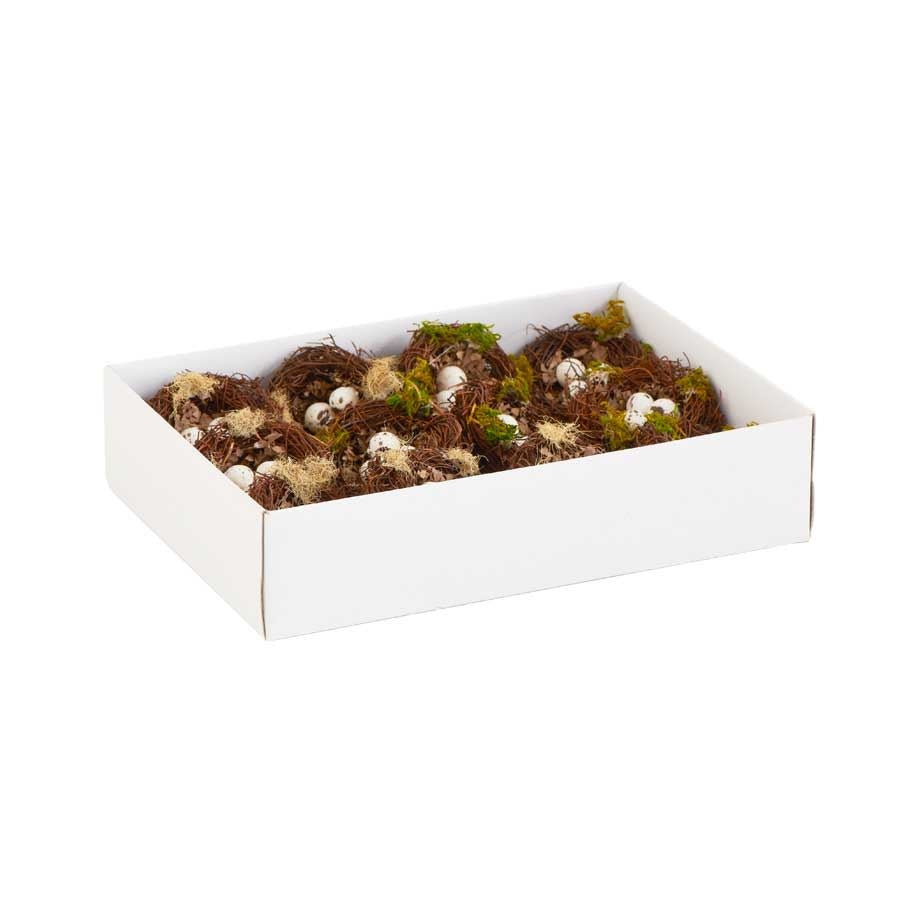
Our decorative bird nests come in a range of looks. The Moss Covered Birds Nest and Mossy Vine Bird Nest have a natural, woodland feel. The Twig Bird Nest with Blue Eggs looks like the real thing, without taking one from the wild.
In the Blue Ridge Mountains, where birds nest in so many trees and porch corners, an artificial nest is a good way to bring that feeling indoors while leaving the real ones for the birds.
Not sure where to put one once you have it? Our guide to where to put a decorative bird nest has ten styling ideas. And if you like the story behind a nest, we cover the meaning and symbolism of bird nest decor too.

Frequently Asked Questions
Is it illegal to keep an empty bird's nest?
In most cases, yes. Federal law generally prohibits possessing the nests of native migratory birds without a permit, whether or not the nest is empty. Taking an old nest home is not allowed even if the birds are long gone.
Can I keep a nest that fell on the ground?
It is still not recommended. The law makes no exception for nests found on the ground, and it is difficult to confirm which species built it. The safest choice is to look, photograph it, and leave it.
Are any bird nests legal to keep?
Nests from non-native species like house sparrows and European starlings are not covered by the federal law, but they are hard to identify, and state rules may apply. Permits are available for scientific and educational purposes, not for decor.
What should I do if a bird builds a nest somewhere inconvenient?
Leave an active nest alone, since moving one with eggs or chicks is illegal. If the nest is in a dangerous spot, contact your state wildlife agency or the Fish and Wildlife Service for guidance.
If you love the look of a nest, we think the best way to enjoy it is an artificial one. Browse our bird nests collection, or stop by our shop on historic Main Street in Blowing Rock, NC to see them in person.


